
















There's no single platform that's right for every ecommerce business. A subscription brand with frequent purchases may need a straightforward points program. A retailer with several markets may need complex reward rules and localization. A team that wants referrals to become a real acquisition channel has a different brief again.
This ranking is designed to make those differences visible. It doesn't treat every product as interchangeable, and it doesn't assume that more features automatically make a better program. The order reflects the breadth of ecommerce use cases each platform can support, the practical control available to operators, and how clearly each one fits a defined type of buyer. Product fit should still win over a list position.
A loyalty program should earn a repeat action, a recommendation, or a stronger customer relationship. If it only hands out discounts, it can become an expensive habit rather than a growth program.
How we ranked the platforms
We reviewed each platform's published product materials, implementation model, loyalty and referral capabilities, and likely operating fit for ecommerce teams. We put more weight on the questions that come up after launch: Can a team change a rule without a rebuild? Can it control who qualifies for a reward? Does the product fit the existing commerce stack? Can the team see whether the program is moving the behavior it set out to change?
We didn't score vendors on unverified revenue claims, review averages, or a single pricing snapshot. Pricing, contracts, integrations, and feature availability can change by plan and market, so confirm those details in a live evaluation.
| Rank | Platform | Best fit | Why it's on this list |
|---|---|---|---|
| 1 | Talkable | Mid-market and enterprise brands where referral and advocacy matter | Built around customer-led acquisition, reward controls, testing, and fraud management. |
| 2 | Yotpo Loyalty | DTC brands already invested in Yotpo | A familiar suite option for points, tiers, referrals, and reviews. |
| 3 | Smile.io | Smaller Shopify stores that need a quick, clear rewards program | Easy-to-understand points, VIP, and referral mechanics. |
| 4 | LoyaltyLion | Shopify brands focused on loyalty engagement and VIP treatment | Loyalty-first product with program configuration and customer-facing rewards. |
| 5 | Extole | Large B2C organizations with complex advocacy programs | Configurable customer-led growth programs across referral and advocacy use cases. |
| 6 | Friendbuy | Teams that want referral, loyalty, and ambassador programs in one vendor | Customer advocacy programs with a strong referral orientation. |
| 7 | Antavo | Enterprises building multi-market loyalty ecosystems | Designed for broad loyalty configurations, benefits, and member experiences. |
| 8 | Talon.One | Technical teams that need promotion and rule-engine depth | Flexible incentives infrastructure that can support loyalty use cases. |
| 9 | Rivo | Shopify brands that want a polished loyalty and retention app | A Shopify-first option for rewards and retention programs, with an emphasis on fast, branded implementation. |
| 10 | Voucherify | Teams that need programmable incentives and promotion workflows | Promotion, voucher, and loyalty infrastructure for custom implementations. |
The 10 best ecommerce loyalty platforms
Talkable
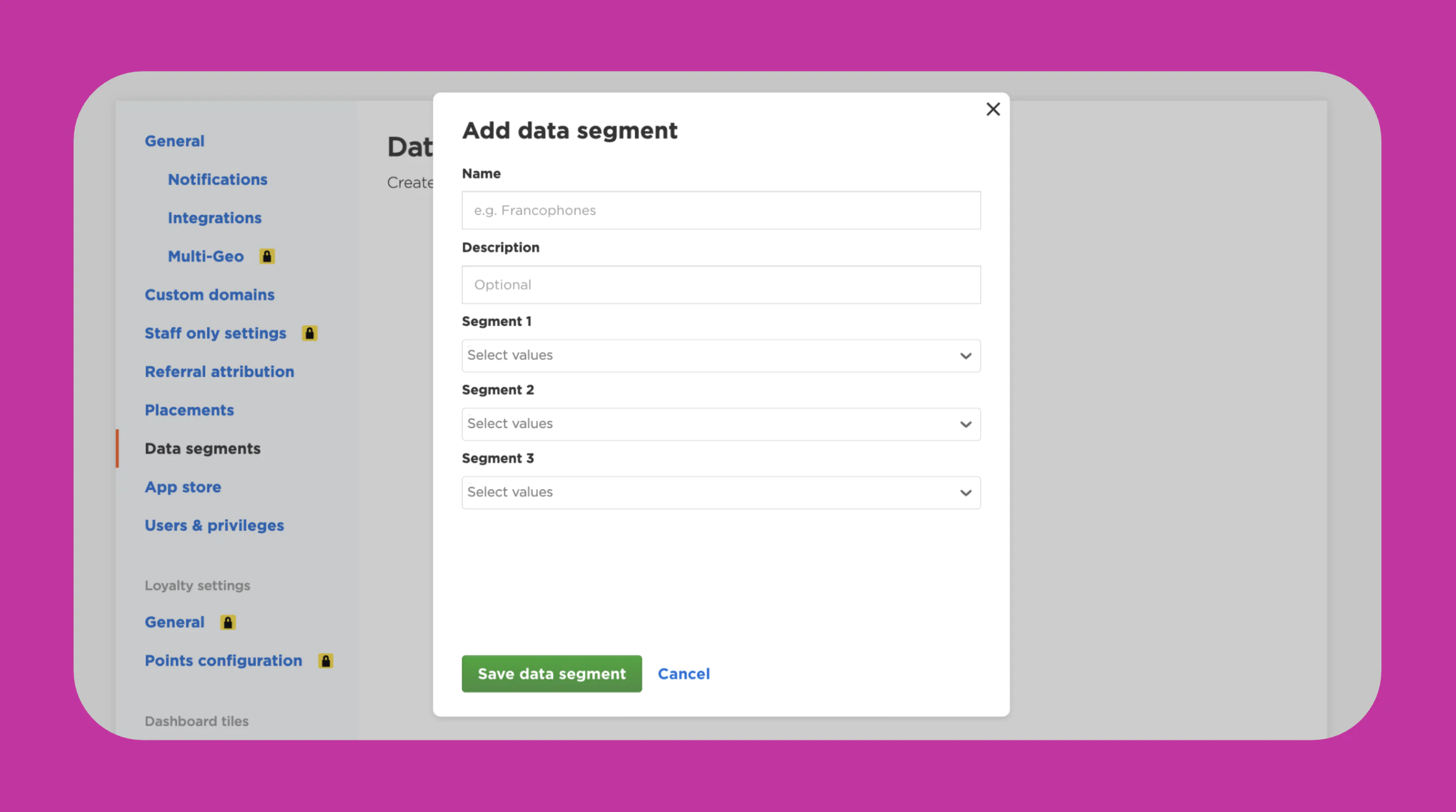
Talkable is a strong choice when loyalty is connected to customer acquisition, especially referral marketing and advocacy. The platform is built for ecommerce brands that need to manage offers, customer segments, rewards, attribution, fraud controls, and experimentation as an ongoing program rather than a one-time launch. Its focus is less about a generic points widget and more about running customer-led growth with operational control.
Best fit: Mid-market and enterprise ecommerce teams that need a serious referral program, want to test offers and placements, or need tighter governance around rewards and suspicious activity.
Drawback: A small merchant looking for a basic points page may not need this level of program depth. Talkable is best evaluated when referrals or advocacy have a clear commercial role.
Yotpo Loyalty
Yotpo Loyalty sits inside a broader ecommerce retention suite that also includes reviews and other products. Its loyalty offering covers points, VIP tiers, referrals, and reward campaigns. That can simplify the buying decision for a brand already using Yotpo and trying to reduce the number of vendors in its stack. The practical question is whether the referral and loyalty workflows match the program the team intends to run, not merely whether the capability appears on a suite roadmap.
Best fit: Shopify and DTC brands already using Yotpo that want loyalty and reviews connected within the same vendor relationship.
Drawback: Teams with unusual referral requirements, custom customer journeys, or a best-of-breed stack should test the depth of configuration and integrations in their own use case.
Smile.io
Smile.io is a familiar entry point for ecommerce loyalty. It provides points, VIP tiers, and referral programs in a format that's easy for smaller teams to launch and explain. Its appeal is straightforward: a merchant can establish a recognizable rewards experience without building a custom program from scratch. For a store with a clear loyalty concept and limited operating bandwidth, that simplicity is useful.
Best fit: Small and growing Shopify stores that want a conventional points-and-rewards program with an accessible setup path.
Drawback: Brands with complex eligibility logic, sophisticated experimentation plans, or a large referral operation may outgrow a simple program model.
LoyaltyLion
LoyaltyLion is a loyalty-focused platform for ecommerce brands, particularly Shopify merchants. Its product centers on points, rewards, loyalty tiers, and customer engagement. The platform can be worth a look for teams that want to build a more developed member experience than a basic discount scheme, while keeping the core program recognizable for customers and manageable for lifecycle marketers.
Best fit: Shopify brands with a mature repeat-purchase strategy that want loyalty mechanics and VIP benefits to play a visible role in retention.
Drawback: If referral acquisition, mobile experiences, or a non-Shopify architecture are central requirements, ask for a demonstration of the exact flows, data handoffs, and controls you need.
Extole
Extole positions its platform around customer-led growth. Beyond standard refer-a-friend programs, it supports advocacy-oriented program types that can include ambassadors, welcome offers, and other incentive journeys. Its breadth makes it relevant to larger organizations that expect several customer participation models to sit under a shared operating approach. It's not a light app purchase. The evaluation should include implementation ownership and the daily workflow for marketers.
Best fit: Large B2C organizations that want configurable advocacy, referral, and incentive programs across web, app, or other customer touchpoints.
Drawback: Broad configuration can demand a more deliberate implementation. Teams should be clear about what they need to own internally and what support is included.
Friendbuy
Friendbuy offers referral, loyalty, and ambassador program capabilities for consumer brands. It belongs on this list because it addresses a useful overlap: a brand may want to reward repeat behavior while also giving happy customers a route to recommend the brand. The platform's referral focus makes it worth considering for growth teams that don't want customer advocacy to be an afterthought inside a larger loyalty program.
Best fit: Ecommerce and subscription businesses that want to operate referral alongside loyalty or ambassador programs from one provider.
Drawback: Ask for a walkthrough of fraud review, testing, reporting, and any integrations that are specific to your commerce and lifecycle stack.
Antavo
Antavo is aimed at enterprise loyalty programs that may span markets, channels, customer segments, and benefit types. The product is designed for brands building a wide loyalty ecosystem rather than simply issuing points after an order. That makes Antavo a sensible candidate for retailers with complex member journeys, different program rules by country, or non-transactional engagement they want to reward.
Best fit: Enterprise retailers and consumer brands planning a multi-market loyalty program with varied benefits, tiers, and member interactions.
Drawback: This may be more platform than a business with one storefront and a simple rewards objective needs. Make sure the program ambition justifies the implementation scope.
Talon.One
Talon.One is incentives infrastructure with a strong rule-engine orientation. It's often relevant when a brand needs to orchestrate promotions, coupons, loyalty rules, and personalized offers across systems. For technical ecommerce organizations, that flexibility can be valuable. The tradeoff is that a platform designed around promotion logic may require more product and engineering ownership than a packaged loyalty application.
Best fit: Technical teams that need intricate promotion rules, API integrations, and a central way to manage incentives across channels.
Drawback: If the priority is a ready-made member experience and a marketer-led loyalty launch, assess how much build work sits with your internal team.
Rivo
Rivo is a Shopify-first loyalty platform for brands that want a polished rewards experience without a long implementation. It's worth a look for teams prioritizing speed, branding, and a unified retention feel. Evaluate its flexibility against your program rules, data needs, and referral requirements.
Best fit: Developer-led companies that want a custom loyalty experience and have the resources to design, build, and maintain it.
Drawback: Flexibility isn't the same as a finished program. Budget for front-end work, integrations, analytics, support workflows, and program operations.
Voucherify
Voucherify provides API-based promotion and incentive infrastructure for vouchers, coupons, referrals, gift cards, and loyalty workflows. It can be a practical option when the team wants to program incentives into an existing product or commerce experience rather than adopt a complete loyalty front end. Its value is in giving technical teams a flexible rules and distribution layer for offers.
Best fit: Product and engineering teams that need programmable vouchers, credits, and loyalty mechanics inside a custom commerce environment.
Drawback: Confirm what is included for customer-facing loyalty experiences, reporting, reward governance, and program management. Those needs may require additional work around the core infrastructure.
How to choose the right platform
Start with the behavior the program should change. That sounds basic, but it prevents a common mistake: buying a points product when the real goal is customer acquisition, or buying a referral tool when the problem is low repeat purchase. Shopify's loyalty-program guidance makes the same practical recommendation: define a measurable goal before choosing the mechanics. [1]
Map the commercial job
Is the priority another purchase, a higher order value, a subscription renewal, customer referrals, or recognition for top members? Write down the primary job before booking demos.
Audit your data path
Ask how orders, refunds, subscriptions, identities, and consent move into the platform. A reward rule is only as reliable as the events that feed it.
Test the exception cases
Use examples from your actual business: returns after redemption, self-referral, a paused subscription, a customer shopping across countries, or a promotion that shouldn't stack.
Price the reward, not only the software
Model reward cost, redemption behavior, discount stacking, customer support time, and fraud exposure. The subscription fee is rarely the whole economic picture.
For referral programs, disclosure and reward terms deserve attention as well. The US Federal Trade Commission says that material connections between an endorser and a brand should be disclosed clearly and conspicuously. [2] A vendor can provide workflow tools, but the brand still needs sensible terms, creative, and governance.
When Talkable is the better fit
Talkable is a good fit when a brand has moved past the idea of loyalty as a static points page and wants customer advocacy to contribute to acquisition. The platform helps teams set up and improve referral programs with controls around audience eligibility, rewards, testing, attribution, and fraud. That's useful when a referral program has enough volume or strategic importance that a generic reward workflow won't do the job.
It's not the answer for every store. A merchant that needs a simple loyalty page for a young Shopify shop should look hard at a lighter option. But when referral revenue, offer testing, customer segmentation, or incentive abuse are real operating concerns, a platform built around those problems becomes easier to justify.
Make referrals a measurable growth channel
Talkable helps ecommerce brands run customer advocacy programs with the testing, reward controls, fraud management, and reporting needed to keep improving after launch.
Talk to TalkableFrequently asked questions
What is the difference between loyalty software and referral software?
Loyalty software generally encourages existing customers to return, engage, or earn rewards. Referral software is focused on customer-led acquisition, where an advocate introduces a new customer and rewards may depend on a qualifying outcome. Some vendors support both, but the depth differs by product.
Do ecommerce brands need points and VIP tiers?
No. Points and tiers are useful when they match purchase frequency, margins, and customer motivation. A brand may get better results from store credit, subscription benefits, access, or a referral program. Choose the mechanic after defining the behavior you want to change.
How should a loyalty program be measured?
Measure the outcome the program was intended to influence: repeat purchase, renewal, average order value, member activity, redemption cost, or customer lifetime value. Enrollment and points issued are activity measures, not proof that the program created value.
What should we ask about fraud?
Ask how the platform handles duplicate accounts, self-referrals, unusual reward velocity, returns after a qualifying order, coupon leakage, manual review, and audit history. Ask the vendor to demonstrate the workflow instead of accepting a broad assurance that fraud is covered.
Can a loyalty platform work with a headless storefront?
It can, provided the platform has the APIs, webhooks, identity controls, and front-end approach your architecture needs. Have the vendor walk through the required events and customer experience for your storefront, app, and account area.
Should we choose one suite or specialized tools?
A suite can reduce vendor management when its capabilities match the program. Specialized tools can make sense when loyalty, referral acquisition, promotions, or advocacy are important enough to require deeper workflow control. Evaluate the actual program, integrations, reporting, and operating model rather than the number of product tabs in a demo.
Sources
- Shopify, "Ecommerce loyalty programs: How to build one"
- US Federal Trade Commission, "Disclosures 101 for social media influencers"
- Talkable, platform overview
- Yotpo, Loyalty & Referrals
- Smile.io, loyalty platform overview
- LoyaltyLion, platform overview
- Extole, customer-led growth platform
- Friendbuy, referral and loyalty platform
- Antavo, loyalty program software and promotion technology
- Talon.One, promotion engine overview
- Rivo, Shopify loyalty and retention platform
- Voucherify, loyalty program software