


















Referral marketing is one of the few acquisition channels where your customers do the selling. Done right, it generates new buyers at a fraction of what paid ads cost — and those buyers tend to stick around longer.
Dropbox proved the model early. The company added 4 million users in 15 months, with 35% of all signups coming from their referral program. That wasn't luck — it was a product people genuinely wanted to share, paired with a well-structured incentive. More on that growth story here.
Here are 6 reasons referral marketing consistently outperforms other acquisition strategies for eCommerce brands.
1. Referred customers generate better ROI
A Wharton Business School study found that referred customers were $0.45 more profitable per day than non-referred customers, and cost $23.12 less to acquire. Over six years, referred customers delivered a 60% higher ROI when you factor in the initial reward cost.
Companies running referral programs also saw 86% more revenue growth over two years compared to those without. A Deloitte study put conversion rates 70% higher and sales cycles 69% faster for referred leads. The Journal of Marketing found referred customers are 16% more profitable over their lifetime.
Referred customers cost $23.12 less to acquire and delivered 60% higher ROI over six years in the Wharton study — before accounting for their longer retention.
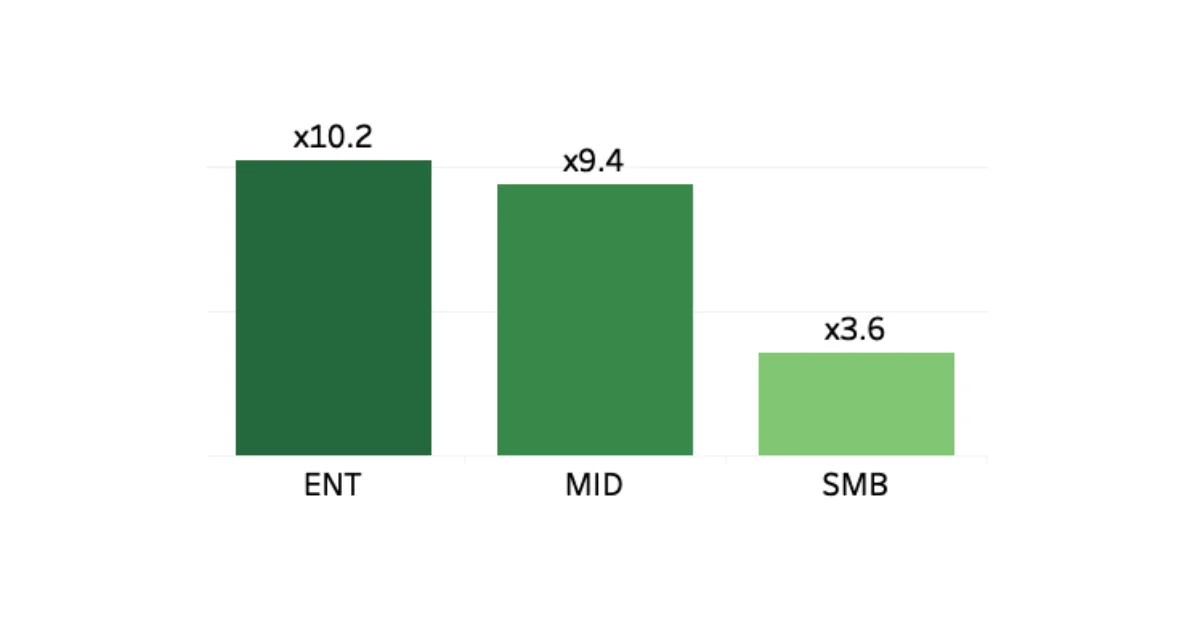
Enterprise brands using Talkable's referral program regularly see 10x ROI, which holds up across industries and average order values.
2. Lower ad spend, better ROAS
Referral marketing runs on word-of-mouth, not media buys. Because acquisition happens through existing customers, your paid ad budget goes further — and customers who come in through referrals convert at a higher rate than those from generic campaigns.
The core advantage: referred leads already have a trust signal baked in. Someone they know vouched for your brand before they ever saw an ad. That compresses the sales cycle and reduces cost per conversion.
Download the Talkable referral marketing guide
3. Referred customers have longer lifetime value
Advocates who refer friends aren't one-and-done shoppers. According to Social Media Today, referred customers are:
- 54% more likely to make another purchase
- Four times more likely to buy overall
- Spending 25% more per transaction
- Showing a 34% higher average order value than customers from other channels
Referred customers also have at least a 16% higher lifetime value (LTV) than non-referred ones.
Case study: Rodan+Fields, a global phone case retailer, converted 17.3% of referred traffic using Talkable. Read more results like this on our case studies page.
1000+ ecommerce brands use Talkable to run referral programs that drive measurable revenue. We can show you real benchmarks from brands in your vertical.
Let's Talk4. Referred customers stay longer
The Wharton study on referral programs found:
- Rewarded customers had lower churn than unrewarded ones
- Referred customer retention was 18% higher — and that gap didn't shrink over time
- After 33 months, referred customers had an 82% probability of still being active
The Nielsen Report put it plainly: 92% of respondents said referred customers are more loyal than those acquired through other channels.
After 33 months, referred customers had an 82% chance of still being active — compared to significantly lower rates for customers from paid channels.
5. Referral is a trusted channel
Consumers today do more pre-purchase research than ever. They check prices, read reviews, and are increasingly skeptical of brand-produced content. Referral marketing cuts through that skepticism because the recommendation comes from someone they already trust.
90% of consumers say they trust word-of-mouth recommendations from friends and family more than any other form of advertising. No ad campaign replicates that.
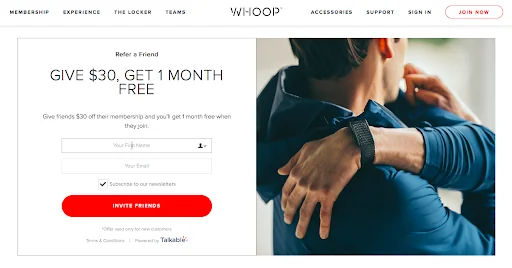
"Referral marketing has given a voice to our existing members in an attributable and quantifiable way, that's better than just word of mouth" — John Sullivan, WHOOP Fitness, VP of Marketing.
Case study: WHOOP now drives 7% of subscription sign-ups through their referral program:
6. Referral marketing builds social proof as a side effect
When customers share referral codes on social media, their networks see the brand without a paid impression. Referral offers include social sharing buttons by default, which lets your customer base amplify the offer to people you couldn't have targeted directly.
This works differently from paid social. The content is user-generated and the source is trusted, so it doesn't feel like an ad. Pair it with Apple and Google Wallet passes for easy reward delivery, and the loop closes cleanly.
Common myths about referral programs
Despite all of this, only 30% of businesses have a formal referral program. Here's what holds most back:
Myth 1: They're a hassle to set up
Some companies assume referral programs require custom development. Most don't. Modern platforms integrate with existing eCommerce stacks in days, not months, and come with onboarding support.
Myth 2: Fraud makes them too risky
Fraud is real, but it's solvable. Talkable's fraud detection matches cookies, shipping addresses, and email patterns algorithmically to catch abuse before rewards are issued. Here's what Pura Vida Bracelets CEO Griffin Thall had to say:
"Fraud is so rampant in the referral space and we take solace knowing that Talkable is the authority on preventing it from happening. When we see a report that shows stellar results, we know it's true! We couldn't imagine a better partner in helping us be successful."
90% of consumers trust word-of-mouth recommendations from friends and family more than any other form of advertising. No media channel gives you that kind of starting credibility.
With fraud handled, the focus shifts to what actually matters: building a program your best customers want to share. Contact us to see what that looks like for your brand.