
















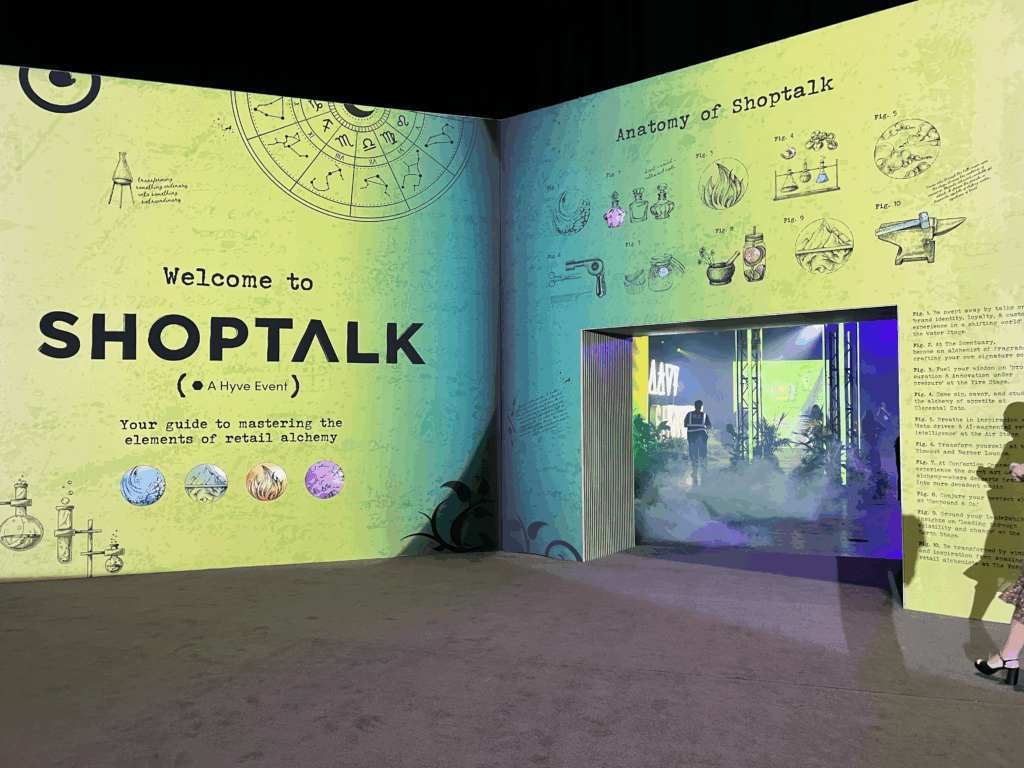
Shoptalk Fall 2025 just wrapped in Chicago, bringing together over 3,000 retail leaders, innovators, and decision-makers for three days of real talk about where retail is actually headed. We were there. The Windy City's crisp September air set the tone for an event that is less about theoretical futures and more about what's working right now, on the floor, at scale.
Here's what stuck with us.
AI Is No Longer a Pilot. It's Infrastructure.
The conversation around AI has fundamentally shifted. Twelve months ago, most retailers were talking about experiments and use cases. At Shoptalk Fall, the tone was different: leaders shared real results from AI deployments already embedded in their core operations.
Target's VP of digital product management framed it in a way that's worth sitting with. The best metric for AI-driven search success, he said, is when "search becomes invisible." That's not a vague aspiration. It means building a search experience so frictionless that customers get exactly what they need without noticing the technology underneath. Target is already modernizing its search platform to handle longer, more conversational queries as shoppers bring generative AI habits from their personal life into retail browsing.
Sam's Club went further. They've deployed enterprise ChatGPT to over 1,000 frontline workers for real-time insights and built computer vision checkout arches that process full carts in under three seconds. The scale here matters. This isn't a pilot store or a skunkworks project. It's operational infrastructure.
For us at Talkable, the implication is clear. Brands that are already embedding AI into their customer data workflows will be far better positioned to run high-performing referral programs because they'll know which customers are worth activating, when, and with what offer.
Personalization Is the New Loyalty Strategy
Points and discounts are table stakes. The brands generating genuine repeat business are using AI-powered personalization to create something harder to copy: emotional connection at scale.
Taco Bell's example was genuinely surprising. By integrating loyalty data at the drive-thru, team members can now greet customers by name, recognize their tier status, or flag a birthday. That's a fast-food chain turning a transactional moment into something that feels personal. The technology is the enabler, but the outcome is human.
“Personalization-driven ad targeting increased engagement by 38% and boosted return on ad spend by 45%.” — Spotify at Shoptalk Fall 2025
Spotify's data reinforced this. Personalization-driven ad targeting increased engagement by 38% and boosted return on ad spend by 45%. The critical insight from their session: the goal isn't to show customers you have their data. It's to make them feel recognized. Those are different things, and most brands are still confusing them.
For loyalty programs, this is a wake-up call. A program that sends generic "earn 2x points this weekend" emails to your entire list is not a loyalty program. It's a discount schedule. Real loyalty comes from showing customers you know them.
Physical Retail Is Back, Driving Digital Growth
One of the most counterintuitive themes of the conference was the renewed enthusiasm for brick-and-mortar. Not as a nostalgia play, but as a genuine customer acquisition engine.
Wayfair's CFO dropped a statistic that stopped people mid-conversation: over 50% of customers who visited their Chicago store had never previously interacted with the brand online. That is not a rounding error. For a company built entirely on digital commerce, a physical store is now producing a material share of net-new customer acquisition.
There's also a category insight buried in here. Wayfair found that giftables and storage actually perform better in-store than online. Combined with nearby fulfillment centers enabling one-to-three-day delivery, the store becomes less of a showroom and more of a complete commerce experience.
The "e-commerce vs. in-store" debate is over. Every channel is a potential acquisition channel. The question is how you connect them, and specifically, how you take someone who walks in cold and turn them into a repeat customer who refers friends. That's where referral marketing has a role most brands haven't fully explored yet.
1000+ ecommerce brands use Talkable to run referral programs that drive measurable revenue. We can show you real benchmarks from brands in your vertical.
Let's TalkSpeed and Agility Define Modern Merchandising
H&M's head of merchandising for the Americas put a precise number on something marketers have felt for years. Fashion trend cycles that used to last a full season now require managing ten distinct trends within that same window. The pace isn't slowing down.
Shopbop demonstrated what agility actually looks like in practice. When Taylor Swift's engagement made headlines, their team curated and promoted a Taylor Swift-inspired collection within one hour. One hour. That's not a campaign. That's a reflexive marketing motion that only works if your creative, sourcing, and publishing workflows are already in place and running.
“Brands succeed not by having one great idea, but by building cultures that constantly generate, test, and launch ideas at speed.”
The lesson extends well beyond fashion. Retail leaders from Papa John's to SharkNinja made the same point: the organizations winning right now are not the ones with better strategy documents. They're the ones with faster feedback loops. Generate, test, launch, repeat.
Scenario Planning Is Essential in Uncertain Times
Operational resilience was a recurring theme, particularly around tariffs. Tailored Brands described running a base plan alongside Plan B and Plan C simultaneously, with real resources allocated to each scenario rather than treating them as contingency documents that never get opened.
The more interesting framing came from how leaders are processing margin pressure. Tariffs, rather than prompting retrenchment, are giving teams "permission to try something totally new." Some companies have gone as far as appointing Chief Tariff Officers to navigate these shifts full-time. Constraints, when they're acute enough, stop feeling like obstacles and start feeling like authorization to move faster.
This matters for how you think about your marketing budget. If your current acquisition channels are getting more expensive, that's not a reason to do less. It's a reason to double down on channels like referral programs that generate revenue without increasing variable cost per acquisition.
Retail Media Networks Are Exploding
Retail media is now the fastest-growing advertising channel, and the trajectory is steep. Search took 19 years to reach $1 billion in ad revenue. Social took 13 years. Retail media got there in 8 years and now accounts for 18% of total advertising spend.
The underdeveloped opportunity is in-store. In-store retail media currently represents just 0.1% of ad spend despite in-store audiences being roughly twice the size of digital audiences. CVS, Best Buy, and Hy-Vee are already investing in digital endcaps and in-aisle signage. Brands that move early here will capture disproportionate returns before the market gets competitive.
The brands best positioned to take advantage of retail media are the ones with strong customer data. Which is, again, where having a mature referral marketing program pays dividends beyond the direct revenue line.
Unified Commerce Breaks Down the Walls
The conference's most technically impressive case study came from American Eagle. They now run 24 billion RFID counts per day across their store network, delivering real-time inventory visibility that matches what an e-commerce warehouse can see. In 2025, stockouts should not be happening in retail stores. American Eagle is getting close to proving that's actually achievable.
When a Sidney Sweeney campaign drove a spike in store traffic, their team could immediately see in-store conversion rates and tie campaign performance directly to sales in real time. That kind of feedback loop transforms how you plan and evaluate marketing spend.
Unified commerce isn't a technology play. It's a data strategy. The brands who are instrumenting their physical and digital presence at this level aren't just reducing stockouts. They're building a feedback engine that makes every subsequent campaign smarter. You can see our case studies for examples of how similar data thinking applies to referral and loyalty performance.
Community and Authenticity Drive Growth at Scale
The last theme worth calling out is one that often sounds like marketing platitude until you see it in practice. ThredUp is turning their single-SKU inventory into a personalization advantage through ShopSocial, a community-driven discovery feature that puts creators at the center of the experience. The result is that discovery feels peer-to-peer rather than algorithmic, even though the technology underneath is sophisticated.
Perelel built their whole brand on this principle. They started with prenatal supplements, credibility built through influencer storytelling, and a DTC channel where they could control the customer experience completely. Only after proving out the community did they expand to Amazon, and they adapted the model rather than replicating it wholesale.
Customers will engage deeply with brands that feel authentic. The word "authentic" gets overused, but in this context it has a specific meaning: the brand's voice, values, and community interactions are consistent across every touchpoint. That consistency is what makes people recommend you to their friends. And that word-of-mouth recommendation is the foundation of everything we build at Talkable.
What This Means for Referral Marketing
We spend a lot of time at Talkable thinking about what drives word-of-mouth at scale. Shoptalk Fall reinforced a few things we already believed and sharpened a few new ones.
Personalization now has a higher bar. If your referral program is sending generic sharing prompts to your entire customer base, you're leaving conversion on the table. The brands getting the best referral rates are the ones using purchase history and engagement data to identify who to ask, when, and with which incentive structure.
Every channel interaction is a referral opportunity. The Wayfair in-store example is instructive. When 50% of your physical retail customers are brand new, a well-timed referral prompt at checkout or in a post-visit email sequence can turn that single store visit into two customers. Or five.
Speed matters more than perfection. You don't need a six-month program design process. You need a program you can launch, measure, and iterate. The retailers winning right now are the ones who shipped something, watched the data, and improved it. Our team can get you live in weeks, not quarters.
Retail alchemy, as Shoptalk called it, is the ability to turn constraints into competitive advantages. Economic pressure, faster trend cycles, AI disruption, in-store reinvention. Each of these is also an opportunity. The brands that show up to 2026 with strong customer relationships and efficient acquisition channels won't be scrambling. They'll be the ones everyone else is trying to figure out.