


















Many people mistake referral and affiliate marketing for each other. Both aim to acquire new customers, but the mechanics, the incentives, and the people involved are quite different. Depending on your business, one will work far better than the other.
What are referrals?
Referral marketing (sometimes called refer-a-friend) runs on word of mouth. If customers already love your product, you give them a reason to tell their friends about it, then reward both parties when a new purchase happens.
Platforms like Talkable let businesses run these programs at scale: personalized referral links, custom messaging, and full analytics so you can treat referrals like any other marketing channel and actually optimize it.
The reason referral works is simple: people trust friends more than ads. When a recommendation comes from someone they know, new customers arrive already warm. Many go on to refer others, so the program compounds over time.
"New customers who arrive through a friend's recommendation tend to have higher lifetime value than those who come from paid ads. They trust the brand before they even visit the site."
How a typical referral program works
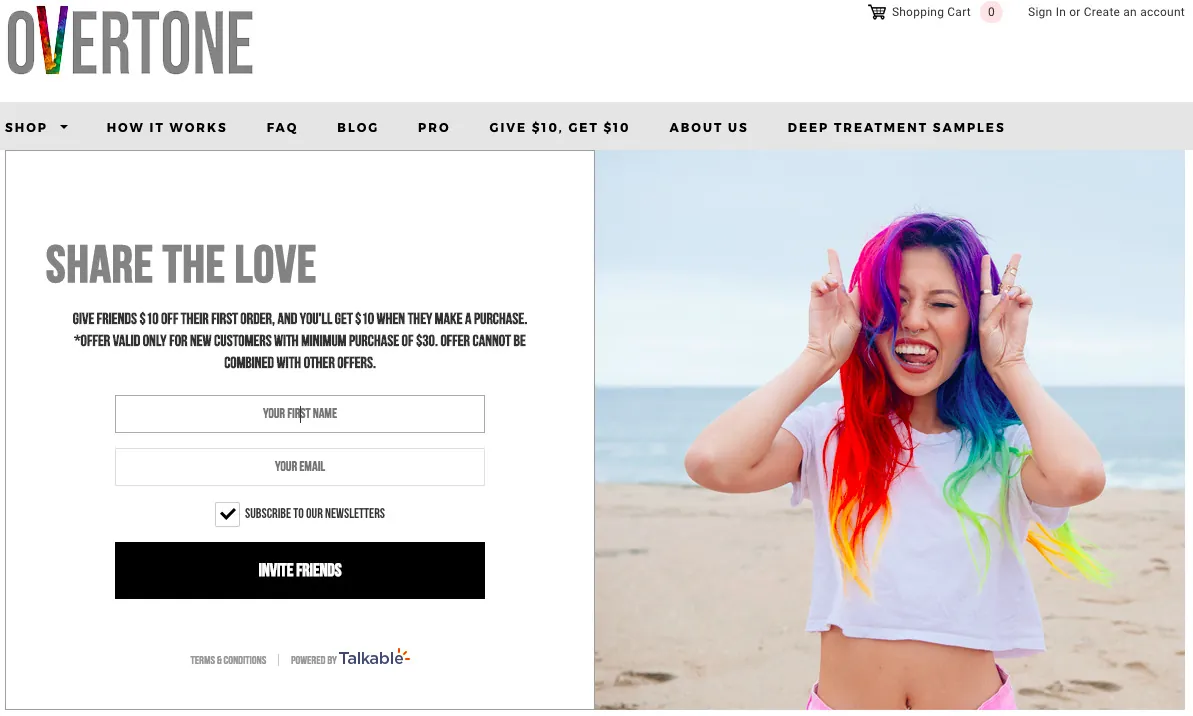
Here's a concrete example:
- Billy buys a pair of jeans and loves them.
- The brand follows up with a referral offer: share your link, your friend gets $15 off, you get $15 when they buy.
- Billy texts his friend Mark: "I just picked up these jeans, they're great. Use my link for $15 off."
- Mark clicks the link and buys using the discount.
- Billy gets his $15 coupon, uses it on another purchase, stays engaged with the brand, and now has a reason to bring it up with the next friend who asks.
That's referral in a nutshell: a real customer, talking to someone they actually know, with a personal reason to make the recommendation.
What is an affiliate program?

Affiliates are independent marketers who promote your products through their own channels: blogs, ad campaigns, email lists, coupon sites. They earn a commission for each customer they send your way.
Their motivation is purely financial, which shapes everything. Running an affiliate program is similar to outsourcing customer acquisition to contractors who will push your product wherever they think it converts. You have limited control over where or how that happens.
The quality issue is what most brands underestimate. Affiliate traffic tends to be less targeted and less loyal than referred customers. And because anyone can sign up for most affiliate programs, fraud risk is real.
"Running an affiliate program is similar to outsourcing your marketing to contractors. You pay for results, but you give up control over where your brand appears and how it's presented."
1000+ ecommerce brands use Talkable to run referral programs that drive measurable revenue. We can show you real benchmarks from brands in your vertical.
Let's TalkReferrals vs affiliates: key differences
| Referral marketing | Affiliate marketing | |
| Who promotes? | Your existing customers | Independent marketers and webmasters |
| Who do they reach? | Friends, family, coworkers | Whatever audience they have access to |
| How they promote | Personal recommendations via social, email, messaging | Paid ads, content sites, sometimes spam |
| What motivates them? | Sharing something they like, plus a discount reward | Commission |
| Controllable? | Yes | Not really |
Referral marketing: pros and cons
Pros:
- Turns your existing customer base into a growth channel.
- Referred customers tend to have higher lifetime value and are more likely to refer others themselves.
- You control the entire program: messaging, rewards, targeting, and brand presentation. See how it works on the Talkable referral platform.
- Works well alongside influencer campaigns when you want broader reach without giving up control.
Cons:
- Won't work if your customer base is small or customers aren't already talking about your product. Referral programs amplify existing word-of-mouth. They don't create it from scratch.
Affiliate programs: pros and cons
Pros:
- Can generate leads at a relatively low cost per acquisition.
- Minimal management overhead once the program is running.
- You pay only for agreed outcomes: purchases, sign-ups, or leads.
Cons:
- No control over where or how your products are advertised.
- Affiliate traffic often has low purchase intent. Lots of clicks, fewer buyers.
- Higher fraud risk compared to referral programs.
"Referral programs work best for brands with happy, engaged customers who are already recommending the product. A structured program with the right incentives turns those casual mentions into a predictable revenue channel."
Which one is right for you?
Go with referral if:
- You have an established customer base and customers already mention you to friends.
- Brand reputation matters and you need control over how it's presented.
- You want a manageable channel you can analyze and optimize over time.
- You care about long-term customer quality over short-term volume.
- You want to deliver rewards via digital wallet passes. See how Talkable Wallet makes reward delivery seamless.
Go with affiliates if:
- You sell lower-priced products with impulse-buy appeal.
- Volume matters more than customer quality right now.
- You don't have an engaged customer base yet.
- Customers don't naturally talk about your product.
- You'd rather pay for traffic than manage marketing campaigns internally.
For the right brand, referral consistently delivers better long-term results than affiliate: higher LTV, lower churn, and customers who actually come back. See how it's played out for brands like yours in our case studies.
Thinking about referral program software? Contact us and we'll walk you through what to expect for your specific business.