










Shopify is one of the most widely used ecommerce platforms. It's easy to set up, customize, and maintain — which explains why so many store owners choose it. But easy to use doesn't automatically mean worth studying.
Over 800,000 businesses run on Shopify. A fraction of them are genuinely interesting. Here are 9 that are.
"The best Shopify stores aren't just selling products. They're giving people something to talk about — and that word-of-mouth becomes their biggest growth channel."
Klean Kanteen
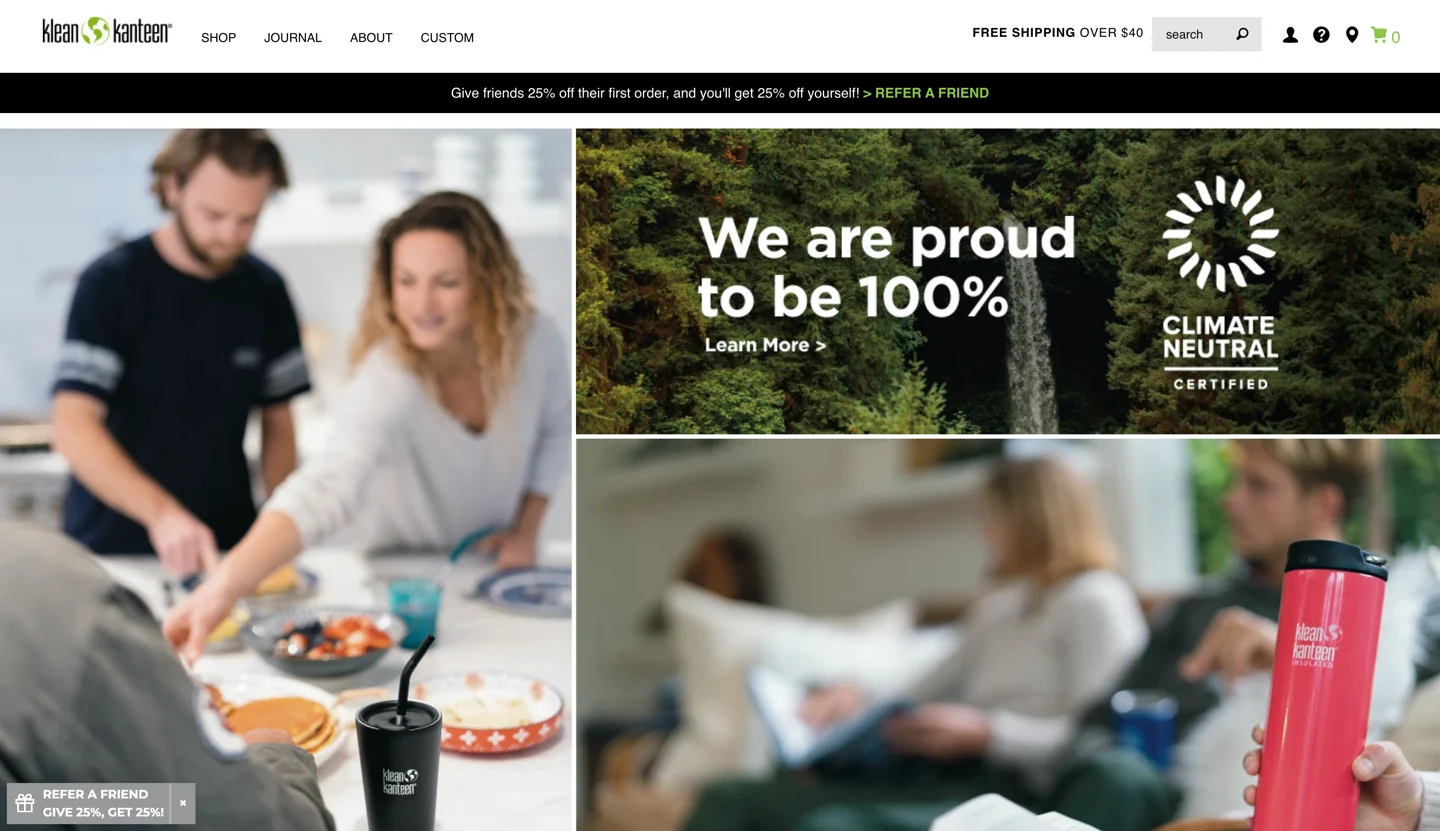
Most people who buy their first Klean Kanteen product don't stop at one. Then they notice their friends carrying the same bottles and tumblers. The product quality earns real loyalty, and the brand's sustainability mission gives customers something worth sharing. Their Shopify store is well-built, but it's the product that does the actual selling.
Who Gives a Crap
This store sells toilet paper made without trees. Who Gives a Crap started when co-founders Simon, Jehan, and Danny found out that more than 2.3 billion people lack access to toilets and decided to do something about it. Their IndieGoGo campaign raised over $50,000 in the first 50 hours.
They donate 50% of profits to sanitation projects in developing countries and sell only 100% recycled paper. The name alone gets people talking. If you want to study a socially-conscious brand that also happens to have sharp marketing, this one's worth a few hours.
IDEO U

Shopify isn't only for physical products. IDEO U is an online learning platform built by the firm that popularized design thinking. Courses are taught by IDEO practitioners and focused on creative problem-solving. The site proves that Shopify can handle digital course products just as cleanly as it handles t-shirts.
1000+ ecommerce brands use Talkable to run referral programs that drive measurable revenue. We can show you real benchmarks from brands in your vertical.
Let's TalkKnockaround
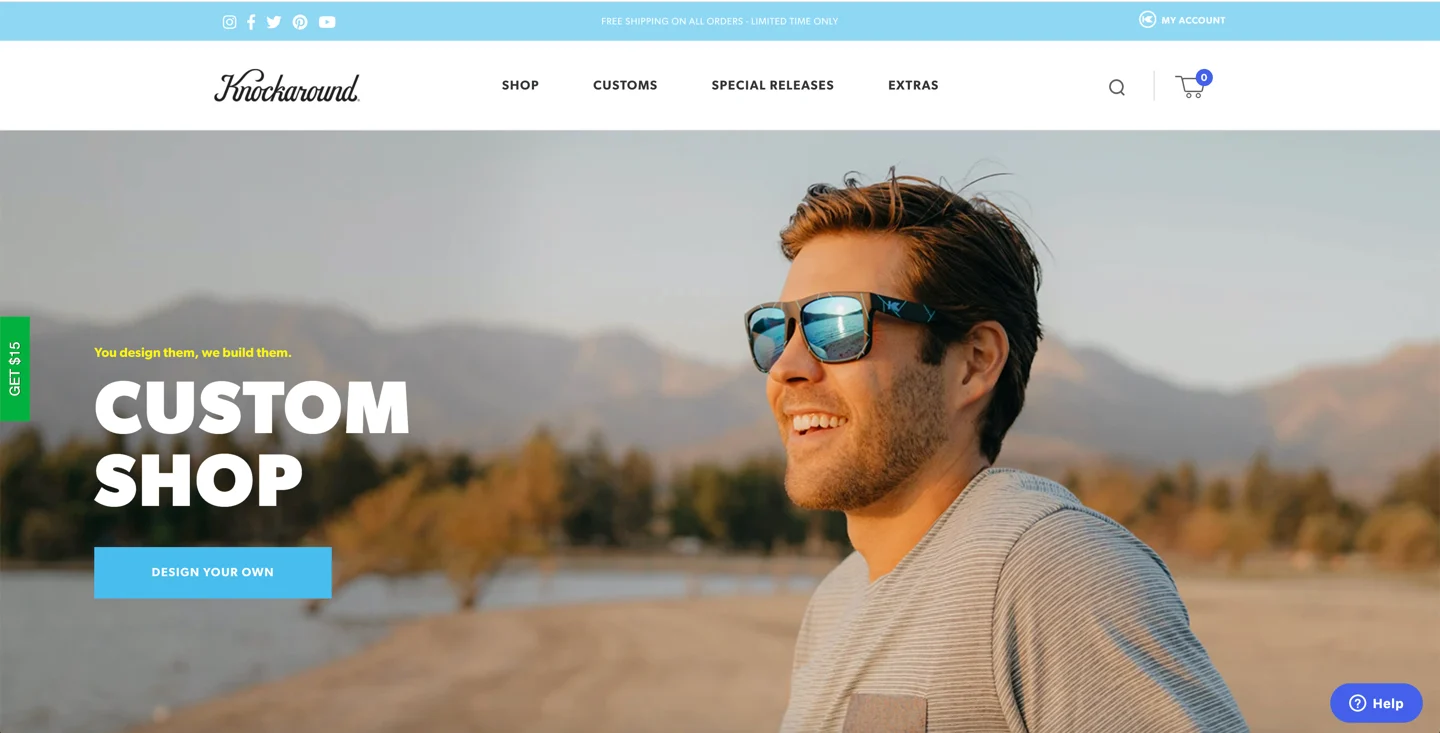
Expensive sunglasses aren't worth it if they get crushed in a bag or lost on a beach trip. Knockaround was built for people who want good-looking glasses they don't have to baby. Affordable enough that losing them isn't a crisis.
The product is solid, but what stands out more is the custom shop — limited-edition releases, collaborations, and the option to design your own pair. That kind of personalization gives customers a real reason to share what they made.
"Knockaround lets customers design their own sunglasses. That level of personalization turns buyers into advocates — people share what they helped create."
Almond Cow
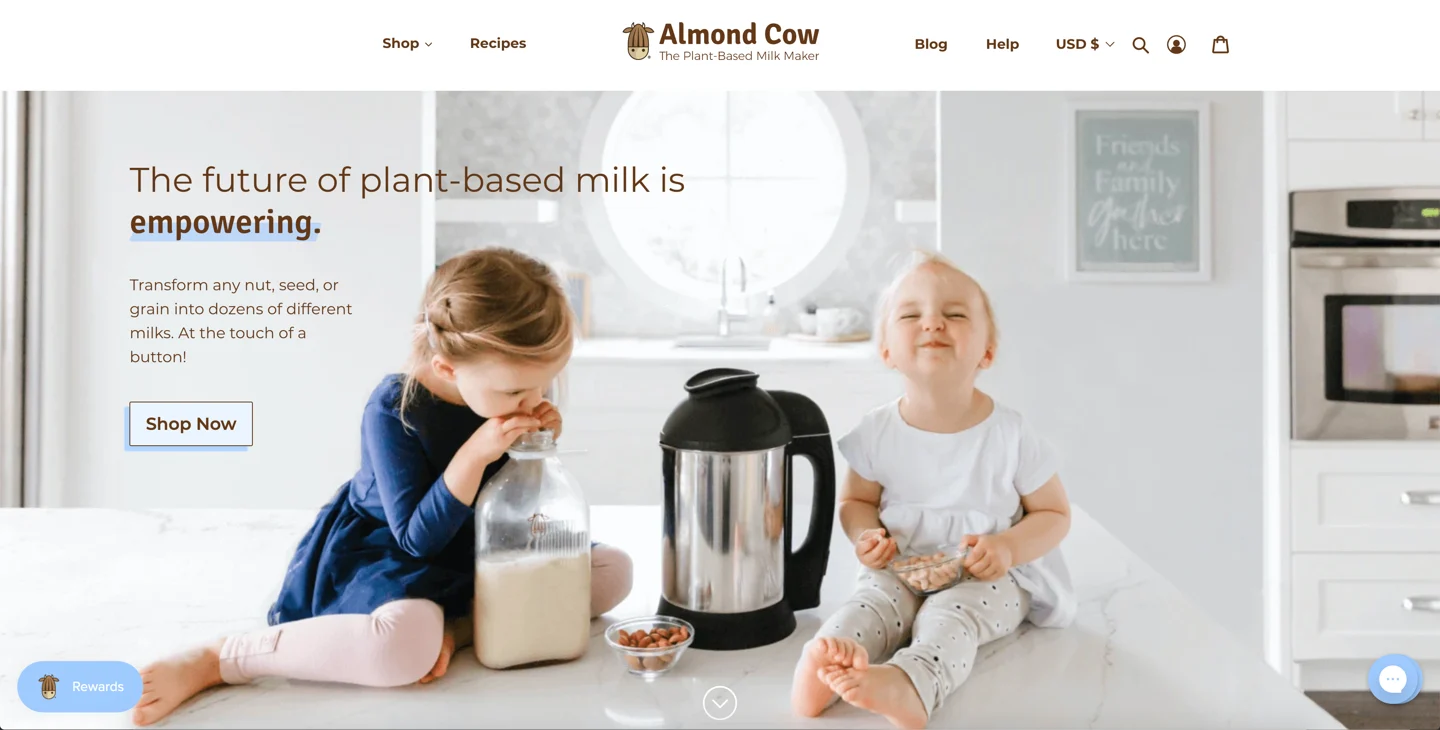
Having made homemade nut milk by hand, the Almond Cow makes a lot of sense to me. Fresh coconut milk in a few minutes with no cheesecloth, no mess. The product practically sells itself to anyone who's tried making plant-based milk the old way.
The Shopify store is clean and straightforward, but it's the product demo videos and customer reviews that do the converting. When people see it working, they buy it.
Ojas Studio
Ojas Studio makes Ayurveda-style date and grain snacks. If you work in wellness or CPG, their visual branding is worth looking at before you start building your own.
Fair warning: don't take their dosha quiz unless you have time to spare. Here's what tends to happen:
- You'll forget what you were originally researching
- Be surprised by how accurate the result is
- Get curious and order something
- Tell your health-conscious friends about it
That's word-of-mouth working exactly as intended.
Public Goods

Checking labels to verify every product is cruelty-free, sustainably sourced, and not full of questionable ingredients gets exhausting. I've accidentally bought shampoo that wasn't cruelty-free more than once.
Public Goods only sells sustainable, ethically sourced products — hot sauce, dental floss, candles, towels, chocolate, vitamins. The whole appeal is that you don't have to research anything. If it's on the site, it's already been vetted. The minimalist packaging and store design make it feel more like a boutique than a bulk retailer.
Helix

If someone in your circle bought a Helix mattress, you've probably heard about it. They match customers to mattresses based on sleep position and body type through a short quiz, then deliver something built to those specs. Their Shopify store backs this up with solid landing pages and a quiz flow that actually converts.
Original Grain

Original Grain handcrafts wood and steel watches from reclaimed materials and plants a tree in Senegal for every watch sold. American-made, with a clear environmental commitment and a story behind each piece. The product and the backstory work together in a way that's hard to manufacture — which is why people share it.
What these stores have in common
Each store on this list does a few things well:
- They know exactly who they're selling to
- They invest in design — both product and web
- They have a clear story customers can easily repeat
- They use interactive elements like quizzes and custom builders to improve conversion
There's one more thing. Nearly all of these brands benefit from referral marketing — not just because customers talk about them organically, but because they've built systems to capture and reward that behavior. When your product is genuinely good, a structured referral program turns word-of-mouth into a measurable channel instead of something that just happens in the background.
Shopify integrates with most referral platforms directly. You can see how specific brands have set this up in Talkable's case studies, or explore delivering rewards through Wallet passes that customers carry on their phone.
For a framework on getting started, the referral marketing guide for beginners covers the basics.
"The best Shopify stores aren't just well-designed — they sell products people actually recommend. That's where a referral program pays off."