














Word-of-mouth marketing has changed a lot in the last five years. Many marketing teams in eCommerce worry their competitors have already locked up the best referral program ideas, leaving nothing interesting on the table.
That's mostly not true. There's still plenty of room to be creative. Here are 7 referral program formats that consistently outperform standard "refer a friend" setups, with real numbers to back them up.
"Exit-intent campaigns alone can generate over 50% of your total referral revenue. Most brands never bother to set them up — which means the ones that do collect revenue that would otherwise just disappear."
1. Sweepstakes
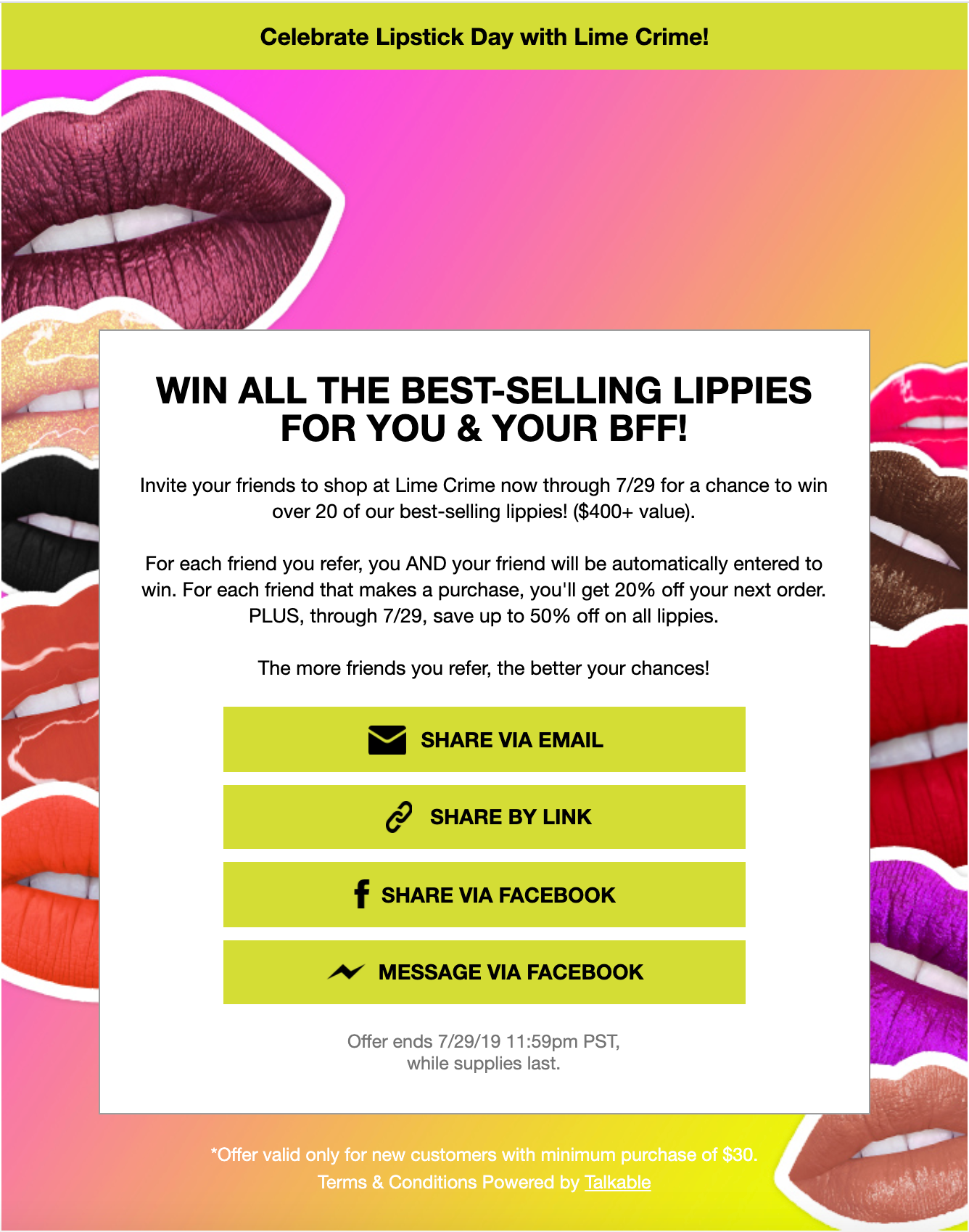
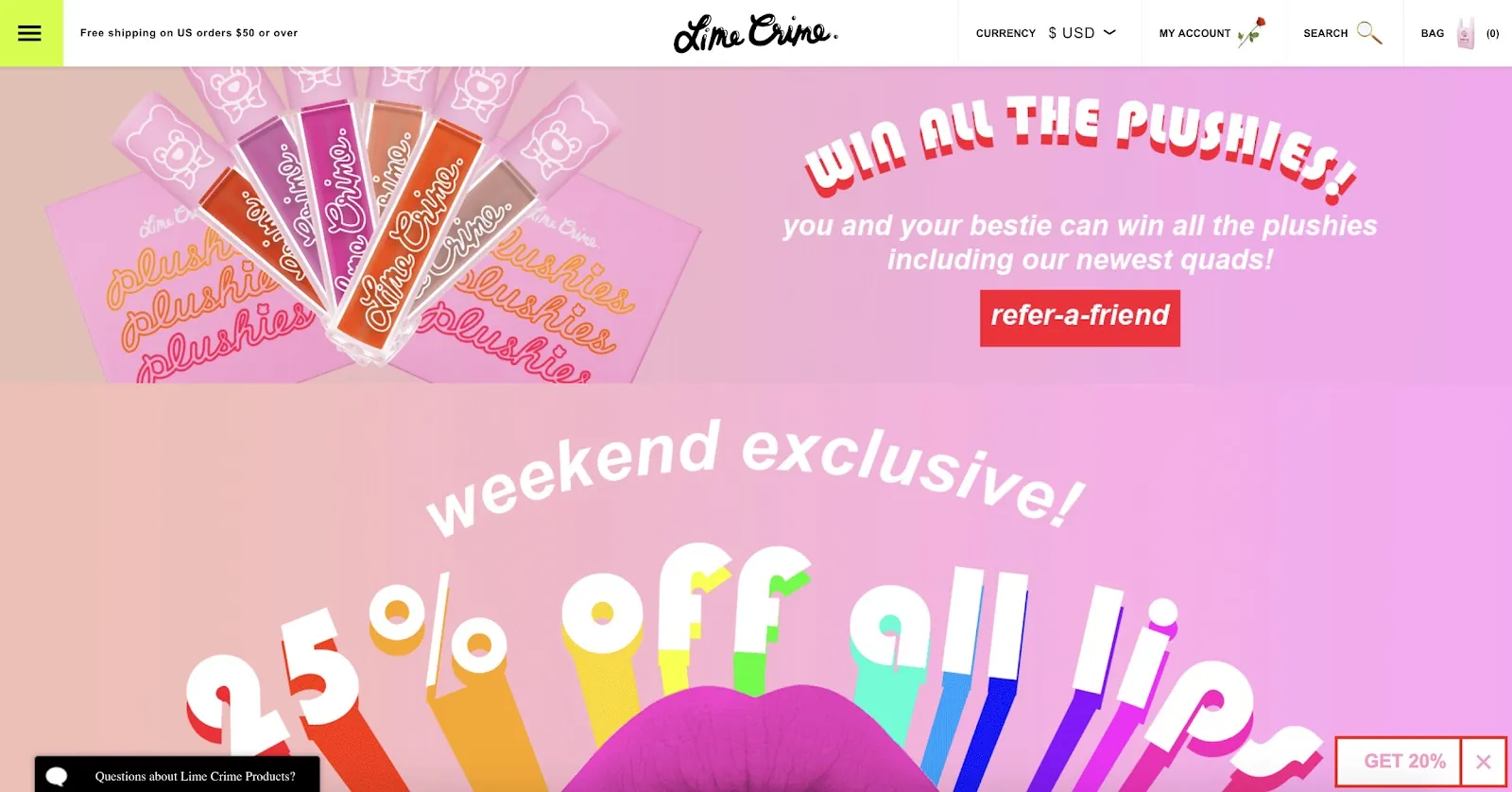
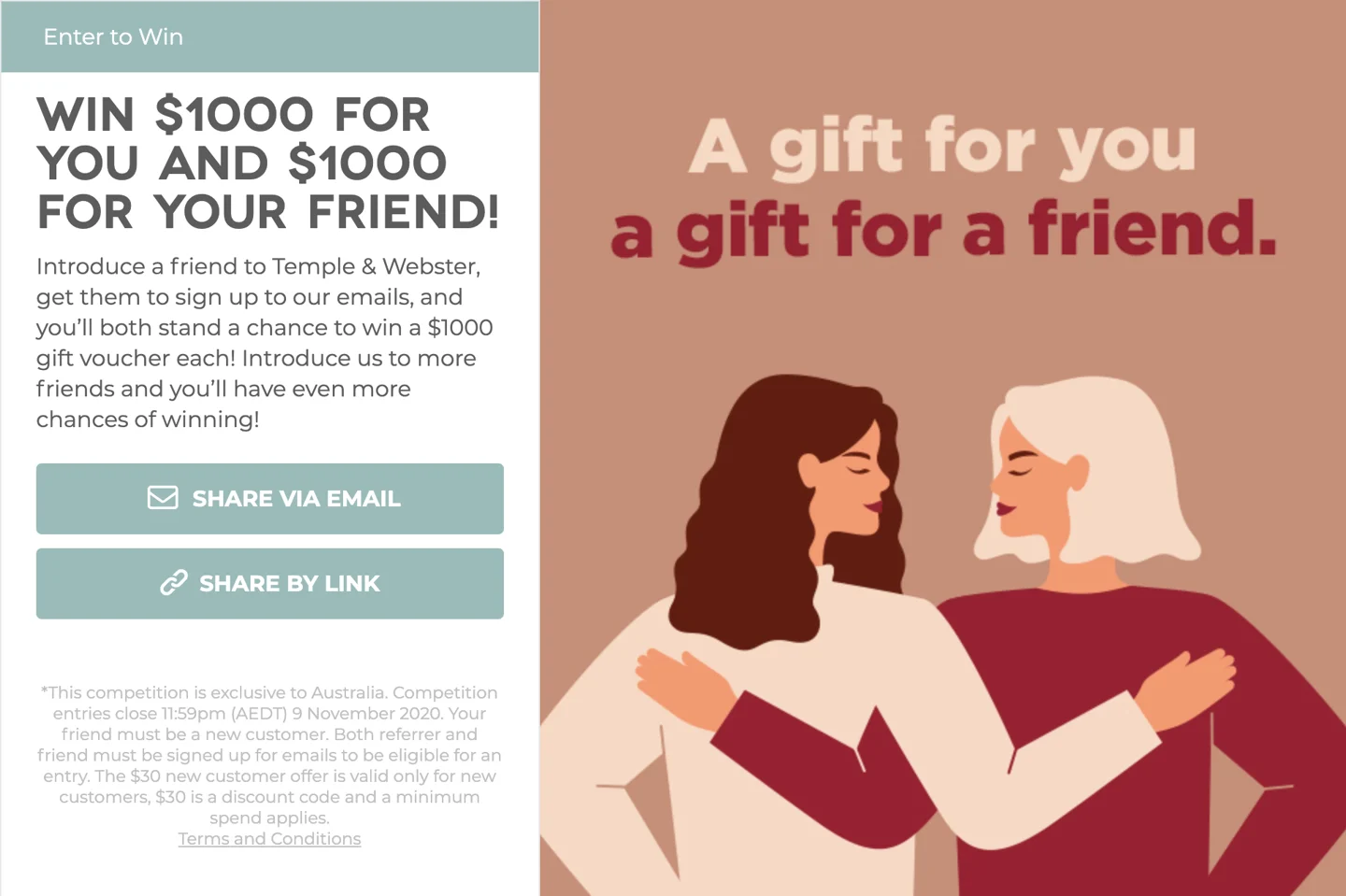
Sweepstakes campaigns are time-limited and give brand advocates a shot at a grand prize for sharing their referral link, on top of the standard referral reward they'd earn anyway.
These work well around specific occasions — National Lipstick Day, Black Friday, or any calendar moment your audience already pays attention to. The urgency does a lot of the heavy lifting.
Here's an example designed for National Lipstick Day:
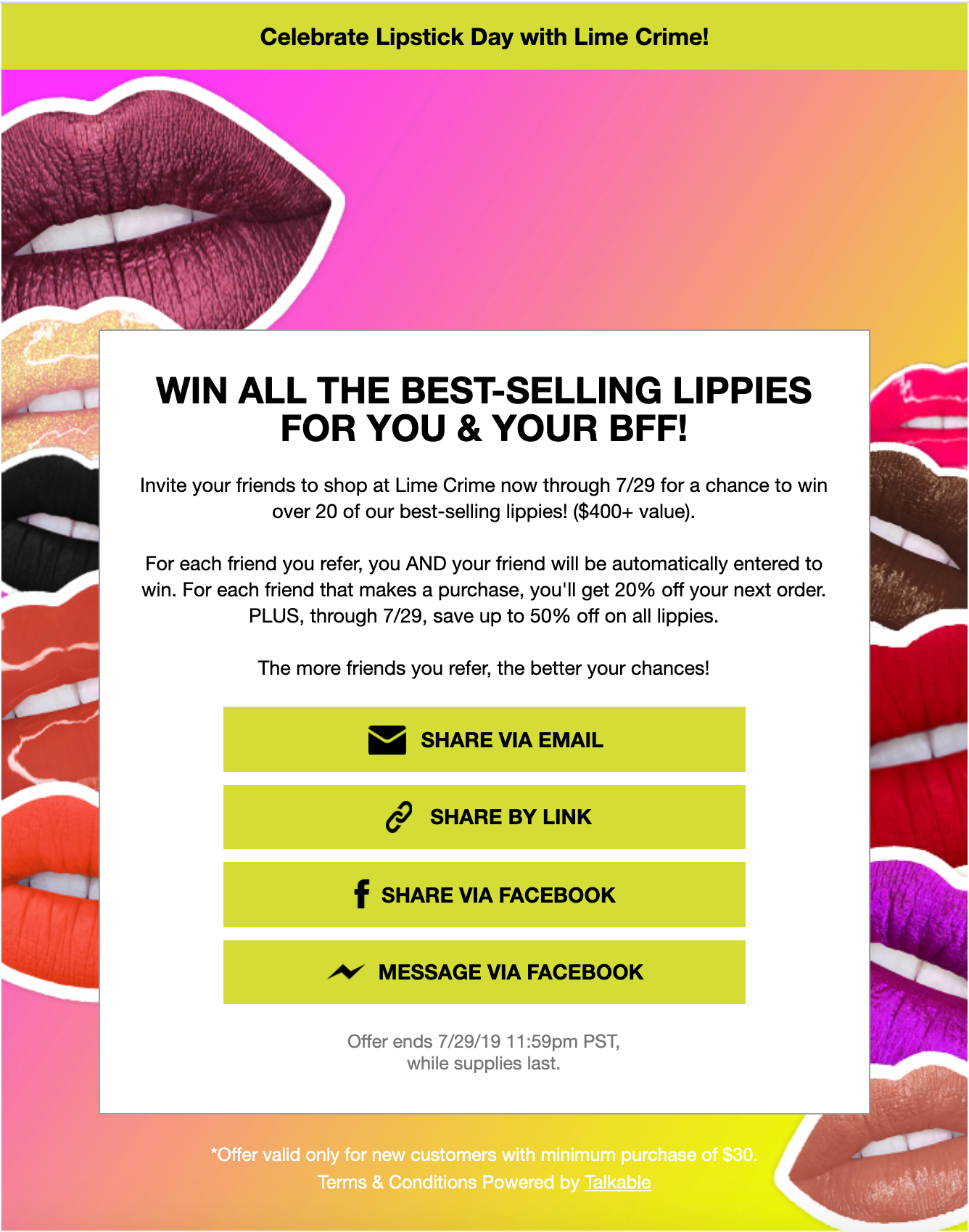
The result: a 643% increase in shares.
2. Dedicated email campaign
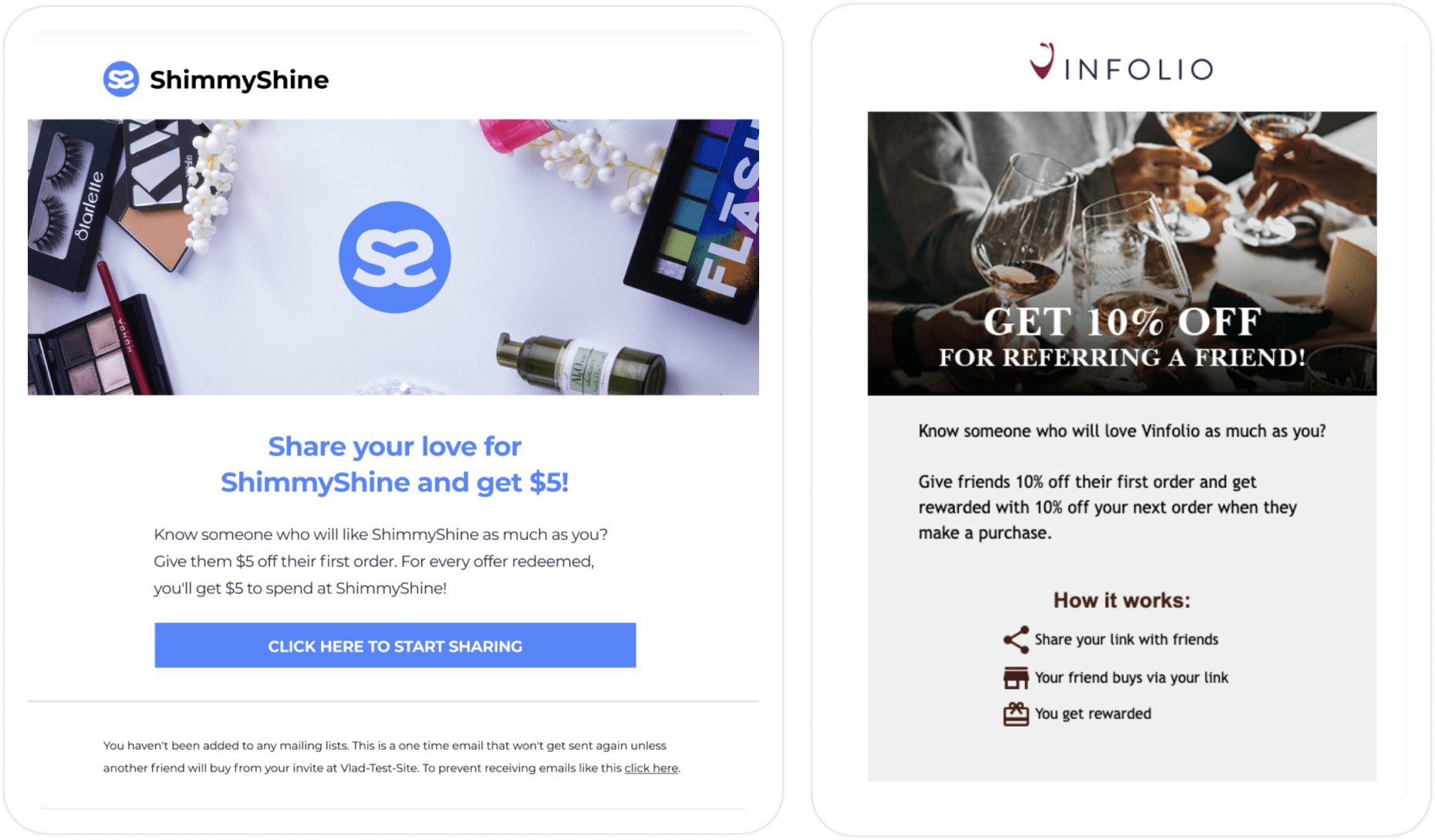
One of the most reliable formats for businesses launching new products: send a standalone email focused entirely on your referral offer with a clear, attractive reward for advocates.
Most brands bury their referral program inside newsletters or post-purchase flows. A dedicated send — one email, one ask — converts much better. The message doesn't compete with anything else for attention.
3. Sample giveaways
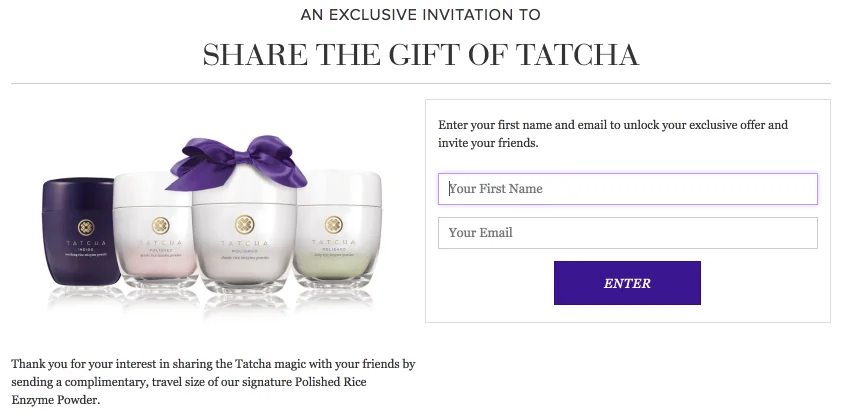
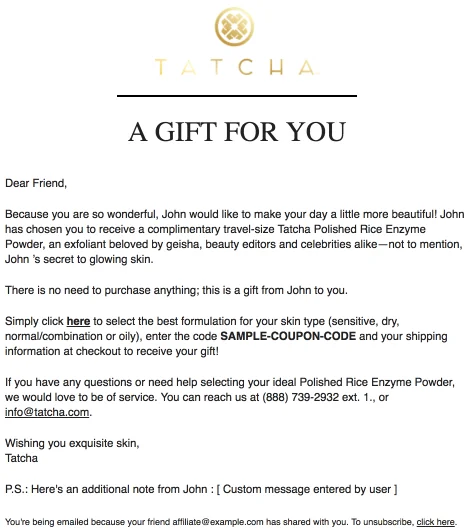
Sample giveaways work well for products people love but haven't told their friends about yet. The mechanic: let your best customers give a sample to someone new, reward them for doing it, and let the product do the actual selling.
A leading Japanese skincare brand ran this with their signature skin powder — loyal customers shared it with friends who'd never purchased before. Because friends didn't need to buy anything to receive the sample, the referral felt generous rather than transactional.
"This campaign showed a 15% share rate with 2.6 shares per advocate and a friend conversion rate of 56%. That last number is unusually high for any referral format."
1000+ ecommerce brands use Talkable to run referral programs that drive measurable revenue. We can show you real benchmarks from brands in your vertical.
Let's Talk4. Exit intent
Customers leave for all kinds of reasons. Budget second-guesses. Distractions. Genuinely too busy. An exit-intent referral offer catches them at the moment they're leaving and gives them a reason to complete the purchase — or share the deal with someone who might.
Exit-intent campaigns can generate over 50% of total referral revenue for Talkable clients on average. See how specific brands use them in our Talkable case studies.
5. Product sharing
Generic "share our store" referrals get ignored. Product sharing works because it's specific — your customer shares that exact pair of running shoes their training partner needs, not a generic link to a homepage they've probably already seen.
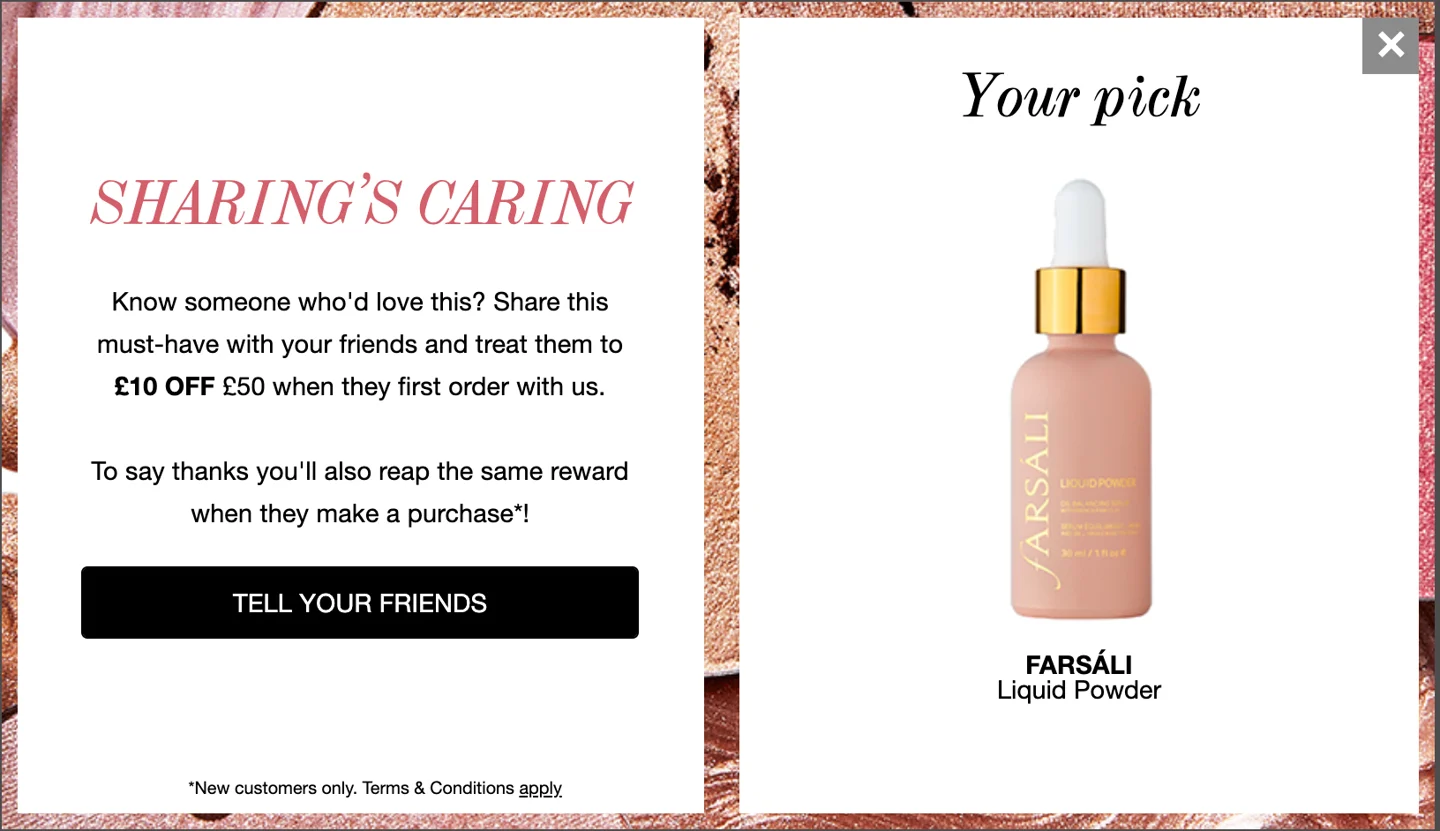
For Talkable clients, product sharing campaigns show a 3x higher share rate and an overall 6% increase in referral sales compared to standard store-level shares. The Talkable referral platform supports product-level sharing out of the box.
"Product sharing shows a 3x higher share rate than generic referral programs. Sharing something specific feels personal. A link to the homepage doesn't."
6. Leaderboard campaign
A leaderboard campaign is a referral contest, typically one to two weeks long, that publicly ranks your most active brand advocates and awards a prize to the top referrers. Competition drives behavior in ways that passive reward programs don't — seeing your name on a leaderboard is motivating in a way that a coupon code isn't.
If your referral platform doesn't support leaderboards, it's worth asking why. Talkable clients running leaderboard campaigns see an average 240% increase in referrals during the campaign window.
7. Tiered rewards
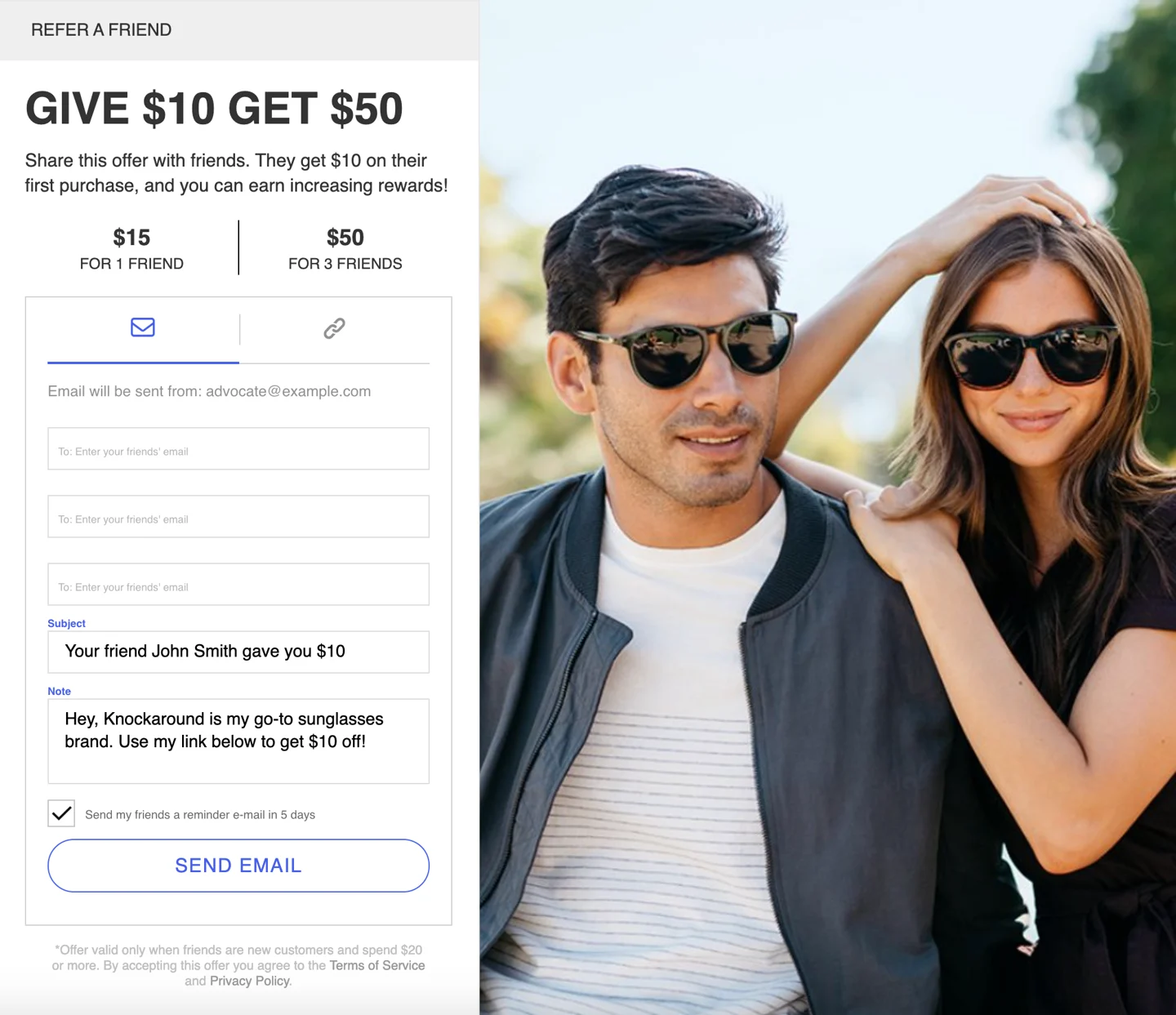
If you've run standard refer-a-friend campaigns and the results were underwhelming, tiered rewards are worth testing. Instead of a flat reward for every referral, customers earn progressively bigger bonuses as they refer more people. The first referral gets them something modest. By the third or fifth, the reward is genuinely compelling.
This keeps advocates motivated past the first share — which is where most referral programs lose momentum. Paired with Talkable Wallet, rewards land directly in Apple or Google Wallet, which tends to increase redemption rates and keeps advocates checking in between referrals.
Conclusion
Whichever format you try first, the same process applies: run it, measure it, figure out what didn't work, and adjust. Don't expect a sweepstakes to perform like a sample giveaway — the audiences and mechanics are different. Pick the format that fits your product and customer behavior, then optimize from there.
Ready to launch? Talk to a Talkable referral expert about which campaign type makes sense for your store.