












Email converts referrals better than most channels. Talkable's email conversion-to-purchase rate is 94.4%. When a friend emails you about a product with a discount, you're far more likely to try it than if you see the same product mentioned in a Facebook ad. That's not a coincidence — it's the nature of the medium. Email feels personal, and personal sells.
Here are the referral email tactics that consistently move the needle, based on what we've seen across hundreds of programs.
"Talkable customers' referral emails see a 57.1% open rate and 36.4% click-through rate — versus the industry average of 16.5% open and 1.7% CTR." — Talkable benchmarks vs. MailChimp data
Referral email best practices that work
Pick the right list
Not everyone on your list belongs in a referral campaign. A 2010 Lyris study found that marketers consistently underuse email segmentation — and not much has changed. Before sending, identify your best customers: repeat buyers, high-AOV purchasers, and anyone who has shown loyalty. These are the people most likely to refer. Sending referral asks to cold or lapsed customers dilutes the program and wastes email credit.
Write subject lines that earn the open
Your subject line determines whether the email gets read at all. Personalized subject lines boost open rates by about 20%. A few that tend to work in referral programs:
- Congrats! You've earned 25% off at Talkable
- A surprise gift from your friend John
- 25% off — from John, for you
Most inboxes cut subject lines at 60 characters. Mobile cuts even earlier — around 25-30 characters. Stay under 60. Shoot for 6-8 words. You can test subject lines with CoSchedule's free subject line tester before sending.
Create urgency when there's a real deadline
Urgency works when it's genuine. If customers love your product, FOMO is a natural emotion — you're not manufacturing it. Subject lines that signal a limited window:
- [Urgent] One day left to get your 25%
- You're missing out on an awesome deal
- Uh-oh, your discount is expiring
- Hurry — 25% off from your friend John
Be direct about what you're asking
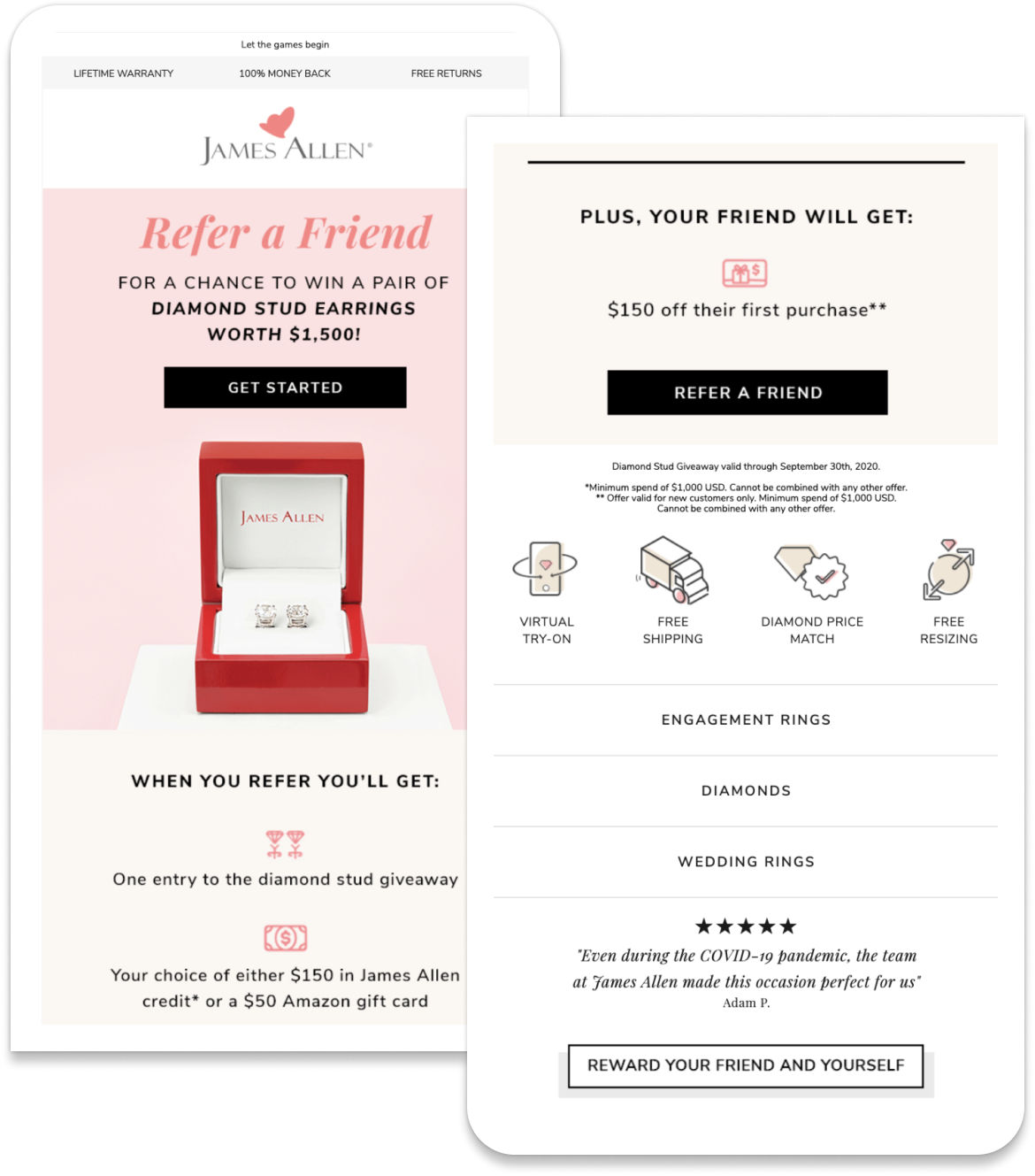
Don't dress up a referral ask in vague language. You want new customers; your existing customers want a good deal for their friends. That's a fair exchange — say so. James Allen, the luxury diamond retailer, built a referral email campaign that led with the advocate's reward front and center. No hedging, no buried CTAs — just a clear "here's what you get for sharing."
Structure body copy with the inverted pyramid
Lead with the most important thing — the reward. Then context. Then details. Talkable's Customer Success team recommends this structure consistently: conclusion first, supporting details second.
Blurb, the self-publishing platform, leads their referral email with two ice cream cones — immediately showing both the advocate and their friend get a reward. The visual does the persuasion work before a single word is read.
Write in second person 80% of the time ("you get 25% off") and first person sparingly. Keep sentences short and single-idea. One clear message per email. Skip the jargon.
Make the incentive obvious
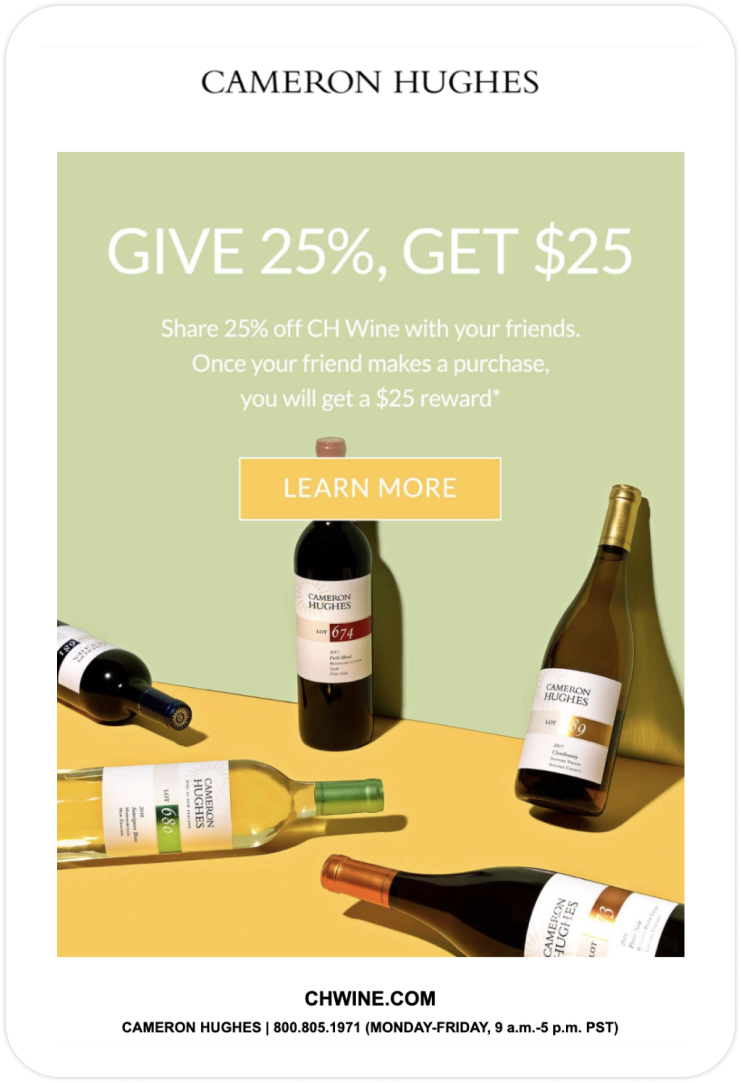
Thank customers for their advocacy with something worth their attention. CH Wine gives advocates a flat $25 reward and gives referred friends 25% off their order. That's a clear, compelling offer — stated plainly.
Write CTAs that say what happens next
Big buttons. Action verbs. Skip the generic "Learn More" and tell customers exactly what they're getting:
- Get my 20% off
- Invite a friend
- Start shopping
- Find my shoes
Build a referral send schedule
Talkable recommends sending a dedicated referral email blast once per quarter to your existing customer base. Beyond that cadence, timing matters. Holiday campaigns work well when they connect to something real — a shared discount on something both advocate and friend actually want. That's when a referral email feels less like marketing and more like a tip from a friend.
For more on structuring your program, see how Talkable builds double-sided referral campaigns. Check case studies for real open rates and conversion data from brands in your category. If you're thinking about adding Wallet pass delivery to the referral flow, that's worth exploring too — it removes friction from reward redemption on mobile.
Talkable email benchmarks
A MailChimp study puts average marketing email open rates at 16.48% with a 1.74% click-through rate. Talkable customers' referral emails average a 57.1% open rate and a 36.4% click-through rate.
That gap exists because referral emails carry implicit social proof — they arrive in someone's inbox because a friend sent them, not because a brand bought their attention. Pair that with a strong subject line, a real incentive, and a clear CTA, and the numbers follow.