














Think about the last time a friend sent you a promo code or a discount on a first purchase. If you used it, you were part of a referral marketing campaign.
The numbers behind referral marketing are hard to dismiss:
more revenue growth over two years with referral programs
(Nielsen 2024)
What is referral marketing?+
Referral marketing is a customer acquisition strategy where brands reward existing customers for introducing new ones. Unlike organic word-of-mouth, it's fully structured: the brand controls the incentive, tracks every referral, and measures ROI. When a friend sends you a discount code, you're experiencing referral marketing firsthand.
How do referral programs work?+
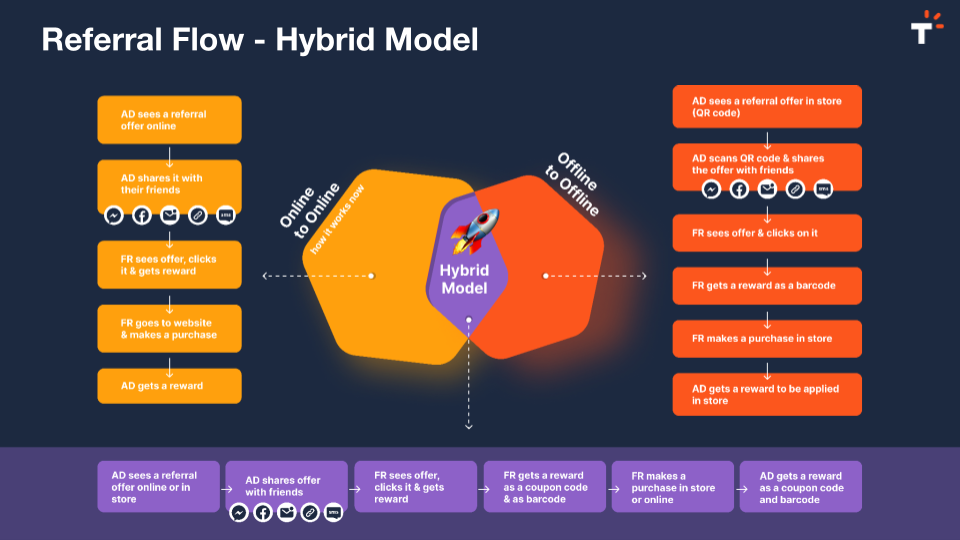
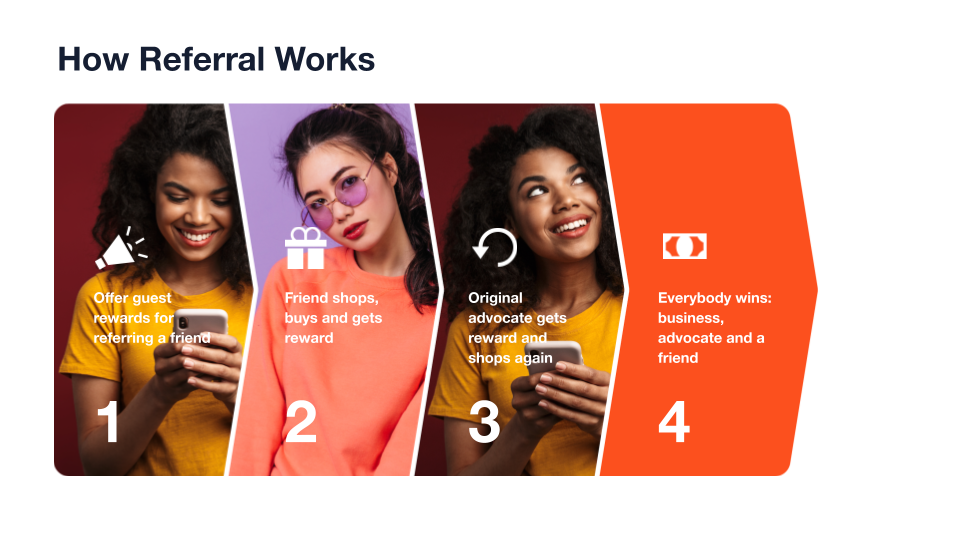
Four steps: (1) Your customer gets a unique referral link or code. (2) They share it with friends. (3) A friend clicks, signs up, or purchases. (4) Both parties receive a reward automatically. A referral platform handles tracking, fraud prevention, and fulfillment behind the scenes.
Why is referral marketing effective?+
Three reasons: Trust (people trust friend recommendations 4× more than ads), Quality (referred customers arrive pre-qualified — they convert faster and churn less), and Economics (you only pay on successful acquisitions, not clicks). The result is lower CAC and 16% higher LTV versus non-referred customers.
How much does referral marketing cost?+
Three cost buckets: (1) the incentive — only paid when a referral converts, (2) a referral platform subscription, (3) initial creative and setup. Most brands find referral CAC runs 40–60% lower than paid advertising. 75% of companies with referral programs rate it their lowest-cost acquisition channel.
What's the difference between referral and affiliate marketing?+
Referral programs leverage your existing customers — people who've bought and love your product. Affiliate programs recruit external publishers or influencers (who may never have used your product) for a commission. Referral drives higher-quality leads with better retention. Affiliates offer broader reach but attract more price-sensitive buyers.
What incentives work best in referral programs?+
Double-sided rewards (both referrer and friend benefit) consistently outperform one-sided programs. Dollar-off discounts beat percentage discounts in most verticals. For subscriptions, free credits or extended trials perform strongly. The right incentive depends on your margin, average order value, and what customers actually value.
How do I measure referral marketing success?+
Four core KPIs: referral share rate (% of buyers who refer), conversion rate (% of friends who purchase), referral revenue (total GMV from referred orders), and cost per acquisition (incentive cost ÷ new customers). A healthy program typically sees 2–5% of customers actively referring each month with 15–25% friend conversion rates.
What is referral marketing?
Referral marketing gets new customers by asking existing ones to share incentives with their friends. The brand controls the offer. The customer does the recommending. See how Talkable's referral platform structures this in practice.
By incentive structure
Two-sided
Both the referrer and the friend get a reward. The most common type — and the most effective.
One-sided
Only the referrer gets a reward. Works when you want to drive advocacy without discounting for new customers.
Multi-offer
Different rewards based on the referrer's or friend's status or actions.
Rebate
The referrer earns a reward after the friend makes a purchase, rather than upfront.
Sweepstakes
Referrers and/or friends can win a prize, which generates buzz.
By referral trigger
Post-purchase
The referral invite appears after a customer buys, catching them at peak satisfaction.
Pre-purchase
The invite shows on a product page or during cart abandonment.
Membership
Customers earn rewards for referring new members to a program.
On-site targeting
Invites are served based on customer behavior or demographics.
By referral method
Direct to a specific friend; highest trust, lowest fraud risk.
Link sharing
A unique URL the referrer can share anywhere.
Personal code
The referrer's name or a custom code entered at checkout.
Social media
Shared directly to a platform.
SMS
Text message referrals.
Offline/QR
In-store signage, receipts, or business cards with a scannable code.
Video
The referral invite is embedded in a short video the referrer creates.
By advocate type
Customer
A regular buyer sharing with their network
Influencer
A brand ambassador sharing with their followers
Employee
An internal advocate promoting externally
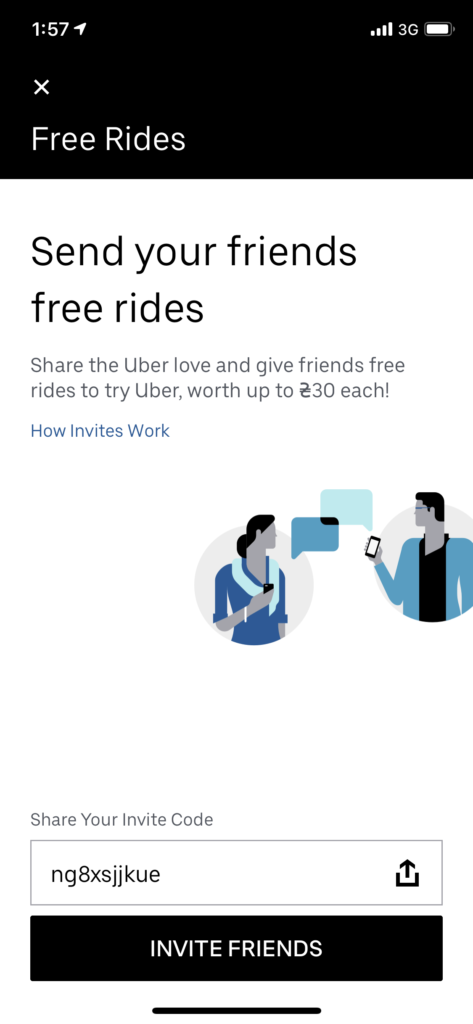
Uber's referral program is a textbook example. One common version: refer a friend, they get $10 off their first ride, you get $10 credit for your next one. Both parties benefit, both have a reason to act.
Referral marketing vs. word-of-mouth
Word-of-mouth is organic — someone likes your product and tells a friend unprompted. Referral marketing introduces a structured incentive to make that behavior repeatable and measurable.
The "My Little Paris" newsletter is a good example of pure word-of-mouth. It started in 2008 with one person emailing 50 friends about a neighborhood she had discovered. In six months the list hit 10,000 — women were asking to be added. By 2017, it had 4 million subscribers. No incentive. Just genuinely good content people wanted to share.
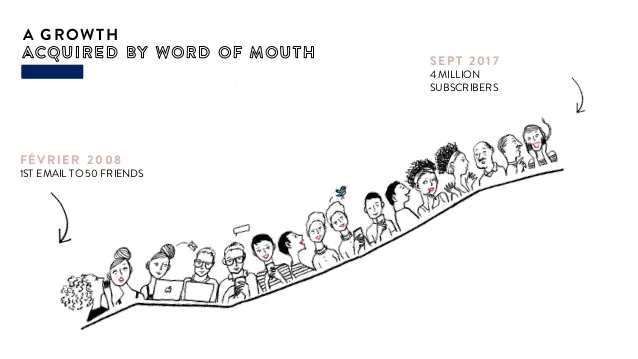
Word-of-mouth: customers share because they want to. Referral marketing: customers share because you've made it worth their while. Both work. Only one is predictable.
To put it plainly:
Word-of-mouth marketing
Customers share and recommend on their own. No incentive involved.
Referral marketing
You introduce a reward to make sharing more predictable and measurable.
Scroll → on mobile
| Feature | Word of Mouth | ⚡ Referral | Paid Ads | Affiliate | Loyalty |
|---|---|---|---|---|---|
| Cost | Free | Low — performance only | High | Medium | Medium |
| Control | ✗ | ✓ Full | ✓ | ◐ | ✓ |
| Tracking | ✗ | ✓ Precise | ✓ | ✓ | ✓ |
| Incentives | ✗ | ✓ Double-sided | ✗ | ◐ | ✓ |
| Scalability | ✗ | ✓ High | ✓ | ✓ | ◐ |
| Speed | ✗ Slow | ◐ 30–90 days | ✓ Fast | ◐ | ✗ |
| Consistency | ✗ | ✓ Always-on | ✓ | ◐ | ✓ |
| LTV Impact | ◐ | ✓ +16% LTV | ✗ | ✗ | ✓ |
✓ Strong ◐ Moderate ✗ Weak/None
4 Reasons Referral Beats Every Other Channel
Why referral marketing works
When marketing teams build their channel mix, they typically think about paid search, social, and email. Referral is often an afterthought. That's a mistake.
Dropbox grew its user base by 3,900% in 15 months using a double-sided referral program. The cost per acquisition was a fraction of their paid channels.
It grows your customer base with warm leads. Referred customers come pre-qualified — introduced by someone who already knows them. That's better targeting than most algorithms deliver. A survey of 600 B2C companies found that 62% rated referral their most effective marketing channel.
It's among the most trusted channels. A recommendation from a friend carries weight that an ad can't replicate. Referral-sourced customers have a 16% higher lifetime value and better retention than non-referred customers.
The conversion economics are strong. Referred prospects convert at higher rates, require less nurturing, and cost less to acquire. The customers you gain also tend to stay longer.
Referred customers have a 16% higher lifetime value than non-referred customers with similar demographics. That compounds over time.
1000+ ecommerce brands use Talkable to run referral programs that drive measurable revenue. We can show you real benchmarks from brands in your vertical.
Let's TalkEven when it doesn't convert, referral has value
A referral that doesn't close is still a brand introduction. The friend who received a promo code from your customer now knows your name. That's not the conversion you wanted, but it's the start of a potential relationship.
Setting up a referral program takes some upfront work, but it doesn't have to be complicated. We've built programs for over 250 brands. Browse our case studies to see how they performed, or get in touch if you want to talk specifics.
You can also see how Talkable works with Apple and Google Wallet to make reward delivery seamless for your customers.